
Alaska car insurance quotes can vary significantly depending on your coverage, driving history, vehicle, and other factors. Alaska requires drivers to carry at least 50/100/25 liability coverage: $50,000 per person and $100,000 per accident for bodily injury, plus $25,000 for property damage, under Alaska Statute 28.22.101.
Alaska is an at-fault state and one of the “No Pay, No Play” states, meaning an uninsured driver’s ability to recover certain damages can be limited even when another driver caused the crash. Because of these requirements, comparing quotes carefully can help you find appropriate coverage at a competitive rate.
You are probably here because a quote looked higher than expected, or because you heard Alaska has some kind of insurance exemption and want to know if it applies to you. Both are common starting points, and both have clear answers once you separate the legal minimum from what actually protects you. If you are new to the basics, see how car insurance works.
This guide walks through Alaska’s real requirements, the state’s unusual remote area exemption, its No Pay No Play rule, and what typically moves your price up or down.
What Do You Need to Know Before Getting Alaska Car Insurance Quotes?
Before requesting quotes, know three things: the state’s 50/100/25 minimum, whether your community falls under the remote area exemption, and how Alaska’s fault system treats uninsured drivers differently from most states. These three facts shape everything else in your search.
Is Alaska a No-Fault or At-Fault State for Car Insurance?
Alaska is an at-fault state, meaning the driver who causes an accident is financially responsible for the other party’s damages. Alaska is also one of ten states with a “No Pay, No Play” law, which is a separate and often overlooked layer on top of the basic at-fault system. Arkansas is also an at-fault state, as covered in our guide to Arkansas car insurance quotes.
Here is the distinction many drivers miss. Being at-fault decides who pays. No Pay, No Play decides whether an uninsured driver, even one who was not at fault, can fully collect for their own injuries. Both rules apply at once in Alaska, and they answer different questions.
What Is the Minimum Liability Insurance Required in Alaska?
Alaska law requires 50/100/25 liability coverage under Alaska Statute 28.22.101, one of the higher state minimums in the country. Georgia’s 25/50/25 minimum, covered in our guide to Georgia car insurance quotes, is half of Alaska’s per-person limit. Alaska’s minimum breaks down to:
- $50,000 in bodily injury liability per person
- $100,000 in bodily injury liability per accident
- $25,000 in property damage liability
Alaska does not require uninsured or underinsured motorist coverage, though it is worth genuinely considering given that roughly 15 percent of drivers on Alaska roads carry no insurance at all. For a broader look at what stepping up from the state minimum actually adds, our full coverage car insurance guide explains the difference in plain terms.
Do You Need Car Insurance If You Live in a Remote Part of Alaska?
You may not need car insurance if you live in a remote Alaska community that is not connected by a land highway or vehicular way to the state’s connected highway system, under Alaska Statute 28.22.011. This exemption exists because vehicle registration itself is not required in many of these areas.
The exemption is not absolute. If you have accumulated moving violations within the past five years, most sources indicate you are expected to carry liability coverage regardless of where you live. Before assuming this exemption applies to you, confirm your specific community’s status and your own driving record, since getting this wrong means driving both unregistered and uninsured without realizing it.
What Happens If You Drive Without Insurance in Alaska?
Driving without proof of insurance in Alaska is treated as an infraction rather than a criminal offense in most cases, but it still carries real consequences: a fine commonly cited around $500, possible license suspension, and an SR-22 filing requirement if the violation involved an accident. Vehicle impoundment is also possible if you cannot provide proof of insurance to an officer. Our list of the cheapest high-risk car insurance companies can help if you need coverage fast.
If you are at fault in an accident causing injury, death, or property damage exceeding $501, Alaska law requires an SR-22 filing regardless of whether you were insured at the time. That threshold is lower than many drivers expect, and a seemingly minor fender bender can cross it quickly once repair costs are added up.
What Do Alaska Auto Insurance Rates Typically Depend On?
Alaska auto insurance rates depend on your driving record, age, credit-based insurance score, coverage level, vehicle type, and whether you live in a road accessible community or a remote one. No single number applies to every driver, since these factors merge differently for each person.
What Factors Affect Your Quote?
- Driving record: a recent at-fault accident or ticket raises your quote for several years
- Credit-based insurance score: Alaska permits this factor in most cases, and it can meaningfully shift your quote
- Coverage level: minimum liability costs far less than full coverage, but leaves your own vehicle unprotected
- Vehicle type: repair cost, safety ratings, and theft rates all affect the premium
- Community type: road accessible cities are generally priced differently than remote, ferry-only, or fly-in communities
Why Do Rates Vary Between Cities and Remote Communities?
Rates vary between cities and remote communities mainly because of traffic density, claims frequency, and how difficult and expensive vehicle repairs become in areas without direct road access. Anchorage, Fairbanks, and Juneau see different pricing patterns from each other, and rural or fly-in communities can differ from all three. RV owners face similar repair-access issues, as our guide to RV insurance quotes in Florida explains.
This is where Alaska’s geography genuinely changes the calculation, not just the scenery. Long rural highway stretches, limited winter daylight, ice, and a real risk of moose-vehicle collisions all make comprehensive coverage a practical consideration rather than an optional extra in much of the state. Home policies face similar weather risks, as our guide to home insurance quotes in Rhode Island explains.
Comparison Table: Alaska State Minimum vs Recommended Coverage
| Coverage Type | Alaska State Minimum | Commonly Recommended Level |
| Bodily injury liability | $50,000 per person / $100,000 per accident | $100,000 per person / $300,000 per accident |
| Property damage liability | $25,000 | $100,000 |
| Uninsured/underinsured motorist | Not required | Matching your liability limits |
Illustrative calculation: published rate data puts Alaska’s average minimum liability policy near $415 to $497 a year depending on the data source, while an average full coverage policy runs closer to $2,215 to $2,401 a year as of early to mid 2026. The roughly $1,800 to $2,000 annual gap between those two figures is often smaller than the cost of replacing a totaled vehicle out of pocket, particularly given Alaska’s higher-than-average vehicle values in many communities. Colorado auto insurance quotes show how another mountain state compares.
How Can You Find Cheap Car Insurance in Alaska?

Cheap car insurance in Alaska is realistic when you compare several insurers using identical coverage limits and actively ask about discounts, rather than accepting the first low number without checking what it excludes. See our full list of car insurance discounts before you shop.
What Discounts Are Commonly Available on Alaska Car Insurance?
- Multi-vehicle and bundling discounts: insuring more than one car, or combining auto with homeowners or renters coverage
- New vehicle discounts: newer vehicles with modern safety features sometimes qualify for lower rates
- Telematics or usage-based discounts: apps or devices that track driving behavior and reward safer habits
- Mature driver course discounts: completing an approved defensive driving or accident prevention course can lower premiums for older drivers
How to Compare Low-Cost Quotes Without Sacrificing Coverage
Gather your driving record, vehicle details, and desired coverage limits first, then request quotes from at least three insurers using those same numbers. Comparing low-cost quotes only works when the liability limits and deductible match across every option you consider. Our car insurance quotes guide walks through this comparison process step by step if you want the fuller breakdown.
Decision checkpoint: if one Alaska quote comes in noticeably lower than the others, check whether it dropped to the bare 50/100/25 minimum or removed a coverage type before assuming it is simply the better deal.
How Do You Find the Best Car Insurance in Alaska for Your Situation?
The best car insurance in Alaska for your situation depends on your driving record, your community’s accessibility, and how much protection you want beyond the state minimum, not on a single company that fits everyone equally. Bundling through home and auto insurance can also improve the value you get.
What Should You Compare Beyond Price When Choosing Alaska Auto Insurance?
Check an insurer’s financial strength rating, its complaint history relative to its size, and whether it has agents or claims support familiar with Alaska’s more remote communities. A cheaper policy from a company with limited Alaska presence can create real friction if you ever need to file a claim from outside a major city. Our comparison of top-rated auto insurers explains how to evaluate that kind of track record in more depth.
Who Is Eligible for Military Restricted Alaska Car Insurance Options?
Military-restricted insurers like USAA are only available to current and former service members and their immediate families, regardless of where in Alaska you live. Alaska’s military population around installations like Joint Base Elmendorf-Richardson and Eielson Air Force Base means many residents do qualify, but those who do not should compare general market insurers directly rather than treating a military-only option as the benchmark. Budget carriers like Direct General Insurance are open to the general public.
What Is Alaska’s No Pay No Play Rule, and How Does It Affect You?
Alaska’s No Pay No Play rule limits an uninsured driver’s ability to recover non-economic damages, such as pain and suffering, even when another driver caused the accident. This is a distinct and separate rule from Alaska’s general at-fault framework.
How Does Being Uninsured Limit Your Recovery in Alaska?
Being uninsured in Alaska generally limits you to economic damages only, meaning medical bills and property damage, while barring compensation for pain and suffering, even if the other driver was clearly at fault. This rule does not apply, however, if the at-fault driver was under the influence, acted recklessly or intentionally, or fled the scene. If a claim turns into a dispute, our Florida insurance claim lawyer guide explains how another state handles it.
What stands out here is how this rule shifts the practical stakes of skipping coverage. A driver might assume that carrying no insurance only risks a fine, but in Alaska, it also risks a meaningfully smaller recovery if someone else causes an accident that injures you. Drivers researching Alabama car insurance can also compare their state’s insurance requirements and protections to better understand how coverage rules differ across the country.
Why Uninsured/Underinsured Motorist Coverage Matters More in Alaska
Uninsured and underinsured motorist coverage matters more in Alaska because the state does not require it, yet roughly 15 percent of drivers on Alaska roads carry no insurance at all. Without this optional coverage, a driver hit by an uninsured motorist has to rely entirely on that driver’s own limited or nonexistent assets to recover damages. Business owners face similar liability gaps, as our guide to general liability insurance cost for an LLC explains.
What Is SR22 Insurance in Alaska, and Do You Need It?
SR22 insurance in Alaska is not a separate policy. It is a certificate your insurer files with the Alaska Division of Motor Vehicles confirming you carry the state’s required liability coverage. Most drivers never need one, since it is triggered by specific violations rather than routine coverage shopping. Commercial drivers face separate rules, covered in our guide to commercial truck insurance requirements.
What Triggers an SR22 Filing Requirement in Alaska?
An SR22 filing in Alaska is generally triggered by a DUI or refusal conviction, or by being at fault in an accident causing injury, death, or property damage exceeding $501. The requirement comes from the state or a court, not from an insurer’s own preference. Our list of the best SR22 insurance companies can help you compare filers.
How Long Does an Alaska SR22 Filing Last for First and Repeat Offenses?
For most non-DUI offenses, Alaska requires an SR22 for three years following the qualifying accident, according to the Alaska Division of Insurance’s consumer guide. DUI and refusal convictions carry a tiered structure: five years for a first offense, ten years for a second, twenty years for a third, and a lifetime requirement for a fourth offense, per the Alaska Division of Motor Vehicles’ official SR22 guidance.
This escalating structure is considerably steeper than what many other states impose, and it is a genuine reason to take an Alaska DUI charge seriously well beyond the immediate legal penalties. Business owners can also review commercial truck insurance cost if work vehicles are involved.
What Happens After a Car Accident in Alaska?
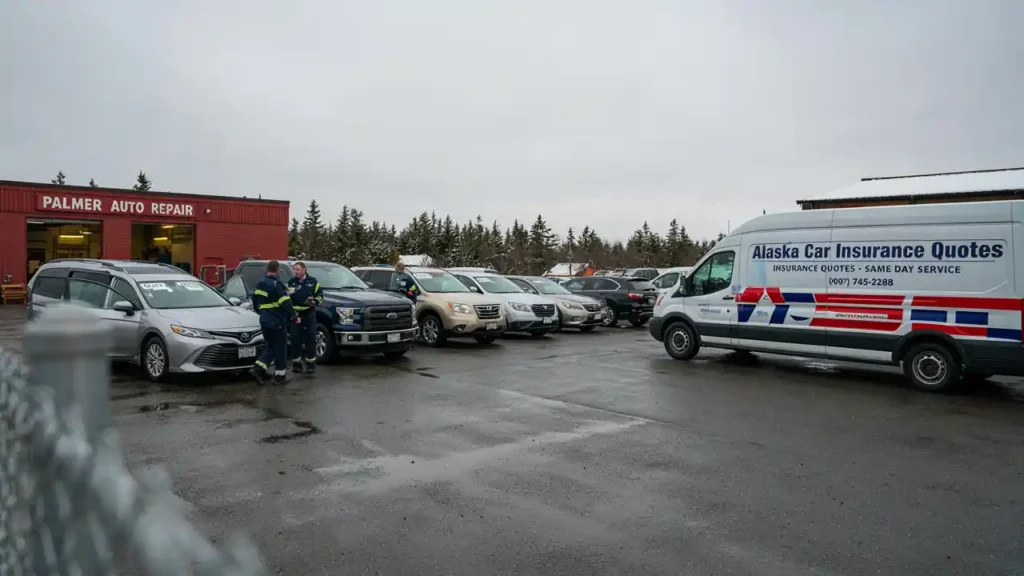
After a car accident in Alaska, you generally have three paths to recover damages: filing with your own insurer, filing directly with the at-fault driver’s insurer, or filing a personal injury lawsuit if a settlement is not reached. Not every claim involves another driver, as our guide on whether car insurance covers pothole damage explains.
How Does Alaska’s At-Fault System Affect Your Claim Options?
Alaska’s at-fault system means the driver responsible for the accident, or their insurer, is generally the party you pursue for compensation, unless you are uninsured yourself, in which case the No Pay No Play rule can limit what you recover. Your own insurer can also pursue reimbursement from the at-fault driver’s insurer on your behalf in many cases. Business owners should also check whether an LLC needs commercial insurance.
What Is the Statute of Limitations for Car Accident Claims in Alaska?
Alaska gives you two years from the date of the accident to file a personal injury or property damage lawsuit, under Alaska Statute 09.10.070, and two years from the date of death for a wrongful death claim, under Alaska Statute 09.55.580. Unlike some states that give longer windows for property damage alone, Alaska applies the same two-year deadline to both types of claims. Knowing these deadlines is especially important for drivers involved in crashes, including those researching commercial auto insurance and the coverage protections available for business vehicles.
Common Mistakes to Avoid When Comparing Quotes
Assuming the Remote Area Insurance Exemption Always Applies
Assuming the remote area exemption automatically applies overlooks both the specific connectivity requirement and the violation points exception that can restore the insurance mandate for individual drivers. Confirm your community’s exact status and your own driving record before treating this exemption as a given.
Confusing State-Required Coverage With Lender-Required Full Coverage
Confusing Alaska’s 50/100/25 state minimum with a lender’s full coverage requirement is a common mistake for financed vehicle owners. The state sets the legal floor. Your loan or lease contract, not Alaska law, is what actually requires collision and comprehensive coverage. Financed work trucks follow similar rules, as our guide to cheap commercial truck insurance explains.
Not Re-Shopping After a Move or Life Change
Not re-shopping your coverage after moving between a road accessible city and a more remote community, adding a driver, or another life change can leave you paying for a rate that no longer reflects your actual situation. This matters even more in Alaska than in many states, given how much community type alone can affect pricing.
How to Choose the Right Policy
Comparing Alaska car insurance quotes is about more than finding the lowest premium. The state’s 50/100/25 liability requirement provides the legal starting point, but your actual needs may call for higher liability limits, uninsured or underinsured motorist coverage, or protection for your own vehicle. Alaska’s remote-area exemption and No Pay No Play rule also make it especially important to understand how the rules apply to your specific situation before deciding to drive without coverage.
When you compare policies, request quotes using the same coverage limits and deductibles so you are making a true price comparison. Look at the protection included, available discounts, insurer support, and how the policy fits your driving and living situation, not just the number at the bottom of the quote. Taking a little extra time to compare your options can help you avoid costly coverage gaps while finding a policy that provides reasonable protection at a price that fits your budget. If you also own a home, compare an Allstate homeowners quote alongside your auto quotes.
Frequently Asked Questions
What is the minimum car insurance required in Alaska?
Alaska requires 50/100/25 liability coverage: $50,000 per person and $100,000 per accident for bodily injury, plus $25,000 for property damage. This is one of the higher state minimums in the country, though it is still a legal floor rather than a recommendation.
Is Alaska a no-fault or at-fault state?
Alaska is an at-fault state and also one of ten states with a No Pay No Play law, which separately limits an uninsured driver’s ability to recover non-economic damages. Both rules apply independently of each other.
Do I need car insurance if I live in a remote area of Alaska?
Possibly not, if your community is not connected to Alaska’s state highway system by a land highway and vehicle registration is not required there. This exemption can be overridden if you have accumulated violations within the past five years, so confirm your specific status before assuming you are exempt.
How much does car insurance cost in Alaska on average?
Published estimates put Alaska’s average minimum liability policy between $415 and $497 per year, with average full coverage between $2,215 and $2,401 per year, depending on the data source and year. Your actual rate depends heavily on your record, community, and vehicle.
What is Alaska’s No Pay No Play rule?
It is a rule that limits an uninsured driver’s recovery to economic damages only, even when another driver caused the accident, with exceptions if that driver was under the influence, acted recklessly or intentionally, or fled the scene. It exists alongside, not instead of, Alaska’s general at-fault system.
How can I get cheap car insurance quotes in Alaska?
Compare at least three insurers using identical coverage limits and deductibles, and ask directly about multi-vehicle, telematics, and mature driver course discounts. The lowest number only means something once the coverage behind it actually matches what you need.

Michael Bennett is a U.S. insurance research and consumer education writer at Insurancebasics Hub, an independent resource dedicated to helping consumers understand insurance policies, coverage decisions, claims, and insurance-related consumer protections. His work covers auto, homeowners, renters, life, and other areas of insurance, with a focus on making complex insurance topics easier to understand.
Michael takes a research-focused approach to insurance content, using authoritative government and regulatory resources, state insurance department guidance, applicable insurance rules, policy provisions, and documented industry information. His articles examine important details such as coverage limits, deductibles, exclusions, policy conditions, premiums, claims, denials, cancellations, renewals, and state-specific requirements.
His goal is to provide accurate, transparent, and practical information that helps readers make better-informed insurance decisions. Insurancebasics Hub provides general educational information and does not replace individualized advice from a licensed insurance professional, attorney, financial professional, or other qualified adviser.
3 Responses