
Searching for an Alabama insurance claim lawyer usually means one thing: your insurer denied, delayed, or underpaid a claim, and you need to know if that crosses into bad faith. Alabama recognizes insurance bad faith as its own legal claim, separate from an ordinary coverage dispute, since the 1981 case Chavers v. National Security Fire and Casualty Co. Not every denial qualifies.
Alabama law generally requires showing the insurer had no legitimate or arguable reason to deny your claim and knew it. This guide explains that distinction, your realistic deadlines, and what steps actually help before you decide whether to involve an attorney. It is educational information, not legal advice.
Your claim got denied, delayed, or lowballed. You are trying to figure out if that is normal or something more.
That question matters. Alabama treats an ordinary coverage disagreement very differently from insurance bad faith in Alabama. This guide walks through what Alabama law actually requires of insurers. It covers what separates a legitimate dispute from bad faith, your real deadlines, and what to document starting today.
Understanding Your Rights With an Alabama Insurance Claim Lawyer
Alabama law implies a duty of good faith and fair dealing in every insurance contract, meaning your insurer must investigate and evaluate your claim honestly rather than looking for a reason to avoid paying it. This duty exists whether or not your policy spells it out explicitly.
The Insurer’s Duty of Good Faith and Fair Dealing
The duty of good faith and fair dealing requires your insurer to conduct a reasonable investigation. It must apply your policy’s actual terms and pay a claim once coverage is established, rather than manufacturing a reason to deny it after the fact.
Alabama’s Administrative Code also sets specific claims handling deadlines. Insurers generally must acknowledge a new claim within 15 days. They must advise you of acceptance or denial within 30 days of receiving a properly completed proof of loss, under Alabama Administrative Code Rule 482-1-125.
First-Party vs. Third-Party Claims
A first-party claim is one you file against your own insurer, such as a homeowners or auto claim on your own policy, while a third-party claim is one you file against someone else’s insurer after they caused your loss. Alabama’s bad faith tort applies specifically to first-party claims, since it grows out of the contractual relationship between you and your own insurer.
This distinction matters early on. If another driver’s insurer is delaying your claim, your legal options and deadlines are different from those in a dispute with your own insurance company. If that driver had no insurance at all, our guide to an uninsured motorist lawsuit explains a different path.
What Counts as Insurance Bad Faith in Alabama?
Bad faith in Alabama generally requires proof of five things. There must be a valid insurance contract, a breach of that contract, an intentional refusal to pay, the absence of any legitimate or arguable reason for that refusal, and the insurer’s actual knowledge that no such reason existed. This standard, first set out in Chavers v. National Security Fire and Casualty Co., 405 So. 2d 1 (Ala. 1981), is intentionally difficult to meet.
“Normal” Bad Faith
Normal bad faith requires showing the insurer lacked any legitimate or arguable reason for the denial and knew it at the time. If the insurer can point to any reasonably debatable basis for its decision, even one a court later disagrees with, normal bad faith generally cannot be established. New York uses a different standard, as our New York insurance claim attorney guide explains.
“Abnormal” Bad Faith
Abnormal bad faith is an alternative path that focuses on how the insurer investigated your claim rather than the final decision itself. This can include a reckless or intentional failure to properly investigate, manufacturing a reason for denial after the fact, or relying on ambiguous, self-drafted policy language to justify a refusal to pay.
When a Denial Is Just a Coverage Dispute, Not Bad Faith
A denial is usually just a coverage dispute, not bad faith, when the insurer has a reasonably debatable basis for its position, even if that position turns out to be wrong. This is where the policy language matters more than how frustrating the denial feels. Alabama courts have consistently protected an insurer’s right to debate a claim, in good faith, when the facts or the policy language are genuinely unclear.
Breach of Contract vs. Bad Faith: What’s the Difference?
Breach of contract vs. bad faith is a key distinction in Alabama: they are two separate legal claims, and understanding the difference affects both your deadline and what you can recover. Breach of contract asks whether the insurer failed to pay what the policy actually owes. Bad faith asks whether the insurer’s refusal to pay was itself wrongful.
| Factor | Breach of Contract | Bad Faith |
| What it asks | Did the insurer fail to pay what the policy owes? | Was the refusal to pay itself wrongful and unreasonable? |
| Typical deadline | Six years under Ala. Code § 6-2-34 | Two years, generally running from when you had notice of possible bad faith |
| Damages available | Limited to the policy benefit value | Policy benefits plus potential emotional distress and punitive damages |
| Burden of proof | Show that the loss was covered and the insurer did not pay | Show no legitimate or arguable reason for the denial, plus the insurer’s knowledge of that |
Decision checkpoint: if you are unsure which deadline applies to your situation, treat the shorter two-year window as the one to act on, since missing it can foreclose the bad faith claim even if your contract claim is still technically alive.
Common Ways Alabama Insurers Delay, Deny, or Underpay Claims
Most claim disputes fall into a handful of recurring patterns, and recognizing which one you are dealing with helps you respond more effectively.
Unreasonable Delays
An unreasonable delay is one that goes beyond the timeframes set in Alabama’s claims handling regulation without a documented, legitimate reason, such as a genuinely complex investigation. If your insurer needs more time, Alabama regulations require it to tell you why, generally within 30 days of receiving your proof of loss and again roughly every 45 days after that.
Lowball Settlement Offers
A lowball offer is not automatically bad faith, since insurers are generally permitted to negotiate, but a settlement offer far below any reasonable estimate of your actual loss is worth scrutinizing closely. Request the specific basis for the number in writing, and compare it against your own repair estimates, medical bills, or replacement costs. Comparing car insurance quotes before you buy also helps you spot carriers with better claims records.
Misrepresenting Policy Terms
Misrepresenting policy terms happens when an insurer cites an exclusion or condition that does not actually appear in your policy. It can also happen when the insurer interprets ambiguous language in the way least favorable to you.
Alabama courts generally require ambiguous policy language to be construed in favor of the policyholder. The insurer that drafted the policy does not get the benefit of the doubt. Knowing what your own policy actually says helps here. Our full coverage car insurance guide breaks down what a standard policy includes, so you have a baseline to compare against a denial.
Incomplete or Biased Investigations
An incomplete or biased investigation is one where the insurer ignored evidence supporting your claim, failed to interview relevant witnesses, or relied on a predetermined conclusion rather than the actual facts. This pattern is central to an abnormal bad faith claim, since the focus is on the process rather than just the outcome.
How Long Do You Have to Act? Alabama’s Deadlines Explained
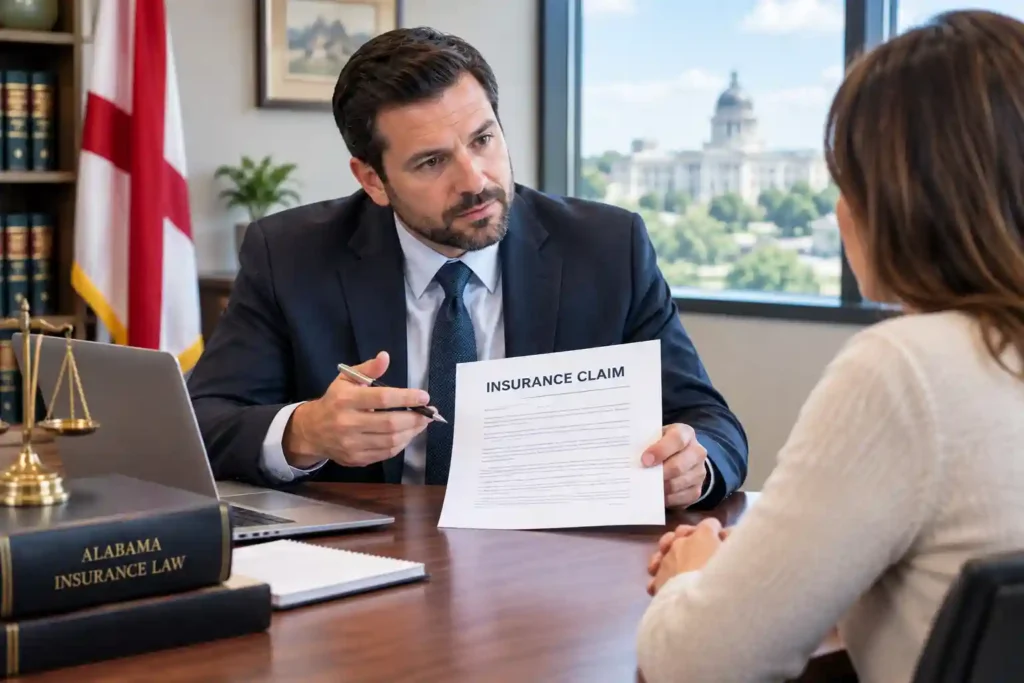
You generally have two years to bring a bad-faith claim in Alabama and six years to bring a breach-of-contract claim, though the clock can start at different points depending on your specific facts. Waiting to act narrows your options rather than protecting them.
The Bad Faith Statute of Limitations
Alabama’s bad faith tort generally carries a two-year statute of limitations, which starts running when you have enough information to reasonably suspect bad faith, often the date of a denial letter. This is considerably shorter than the contract deadline, which is why acting early matters even if you are still hoping to resolve things informally. Other states run different clocks, as our Alaska insurance claim lawyer guide explains.
The Breach-of-Contract Deadline
Alabama’s breach of contract deadline is generally six years under Ala. Code § 6-2-34, and this period cannot be shortened by a provision in your own policy, since Alabama law voids contract terms that attempt to do so. This longer window gives you more room, but it does not extend the separate, shorter bad-faith deadline.
Deadlines like these can differ meaningfully from state to state. That is worth knowing if you have moved or hold a policy written elsewhere. Our guide to Alaska car insurance quotes covers how that state handles its own accident-related deadlines. Alaska’s framework works quite differently from Alabama’s.
Policy-Specific Suit Limitations
Some policies include their own suit limitation clause requiring a lawsuit within a shorter window than Alabama’s general statutes, though these provisions cannot legally shorten the six-year contract deadline under Alabama law. Read your policy’s own language carefully, and do not assume a shorter clause is automatically enforceable without understanding how it interacts with state law.
What Compensation Is Available?
The compensation available depends heavily on whether your situation involves only a breach of contract or also a viable bad faith claim, since Alabama treats the two very differently.
Policy Benefits and Consequential Damages
Policy benefits are the amount actually owed under your policy for the covered loss, and a straightforward breach of contract claim is generally limited to that value plus any directly related consequential losses. This is the baseline recovery regardless of whether bad faith is also involved. Our guide on how to get liability car insurance explains how policy limits cap what an insurer owes.
Emotional Distress Damages
Emotional distress damages may be available in a successful bad faith claim, since Alabama recognizes bad faith as a tort rather than treating it purely as a contract dispute, where such damages are usually unavailable. Whether these damages are actually awarded depends heavily on the specific facts and evidence in your case. Neighboring states handle claims under their own rules, as Louisiana car insurance quotes show.
Punitive Damages
Punitive damages are only available if bad faith, or a similar wrongful standard like wantonness, is actually established. Alabama caps them under Ala. Code § 6-11-21(a). The cap is the greater of three times compensatory damages or $500,000 for cases that do not involve physical injury. This cap adjusts periodically for inflation. A different, higher cap applies to cases involving physical injury. The exact figure that applies to any situation should be confirmed against the current statute rather than assumed.
What to Do in the First 30 Days After a Denial
The first 30 days after a denial are when documentation and a clear paper trail matter most, regardless of whether you eventually pursue a formal dispute.
Document Everything
Save your denial letter, every piece of claim correspondence, adjuster call logs with dates and summaries, photos, repair or medical estimates, and any documents the insurer has provided about its investigation. A written record of what was said and when is often the deciding factor in later disputes.
Contact the Adjuster’s Supervisor
Contacting the adjuster’s supervisor directly is a reasonable next step if you believe your claim has been mishandled, since many disputes get resolved at this level without ever escalating further. Put your concerns in writing so there is a dated record of the escalation.
File a Complaint with the Alabama Department of Insurance
Filing a complaint with the Alabama Department of Insurance is a concrete, free step you can take if you believe your insurer violated the state’s claims handling rules. The department can investigate potential regulatory violations, though it generally does not act as your personal advocate in a private dispute over money. Every state’s rules differ, as Nevada car insurance quotes show for that state.
When to Consult an Insurance Dispute Attorney
Consulting an attorney becomes worth considering once the claim value is significant, the denial reasoning seems clearly inconsistent with your policy, or the insurer has stopped communicating altogether. An attorney can evaluate whether your specific facts support a bad-faith claim rather than just a coverage disagreement, which is a distinction that is often hard to assess accurately without legal training. No-fault states handle auto disputes differently, as New York car insurance quotes explain.
Special Situation: ERISA-Governed Claims
ERISA governs most employer-provided benefit plans, including many group disability and health plans, and it changes the process significantly compared to a standard Alabama insurance dispute. Claims under ERISA generally cannot use Alabama’s state-law bad-faith tort at all.
How ERISA Appeals Differ from Bad Faith Lawsuits
ERISA appeals follow a federal administrative process with its own internal appeal deadlines, and if that internal appeal fails, the case generally proceeds in federal court under a different legal standard than Alabama’s bad-faith tort. This is a meaningfully different track, and treating an ERISA denial the same way as a standard homeowners or auto denial can cost you the internal appeal window before you realize a different process applies.
Alabama Claim Disputes by Insurance Type
Alabama claim disputes by insurance type tend to follow the same bad faith framework, but each type of claim raises its own recurring issues worth knowing in advance.
Homeowners and Storm Damage Claims
Homeowners and storm damage claims often involve disputes over the scope of damage, the method used to value repairs, and whether an exclusion like flood or earth movement actually applies. After a major regional storm event, expect claims processing to slow simply due to volume, which is different from a deliberate delay tied to your specific claim. Gulf Coast neighbors face similar storm-related issues, as Florida car insurance quotes explain.
Auto Insurance Claims
Auto insurance claims frequently involve disputes over vehicle valuation after a total loss. Liability determinations and underinsured motorist coverage come up often, too. Our Alabama car insurance quotes explain what a typical policy includes before a dispute ever starts.
Disability and Health Insurance Claims
Disability and health insurance claims often turn on medical documentation and whether a condition meets the policy’s specific definition of disability or medical necessity. Group plans obtained through an employer frequently fall under ERISA, which changes the available process significantly, as covered above. Life insurance claims raise similar definition disputes, as our guide to a $2 million life insurance policy explains.
Business Interruption Claims
Business interruption claims typically require proving lost income tied directly to a covered event. This can be one of the more document-intensive claim types. A business that also carries commercial auto insurance should keep one thing in mind: a single incident can sometimes touch more than one policy at once. That adds coordination on top of the underlying dispute.
Common Mistakes Policyholders Make
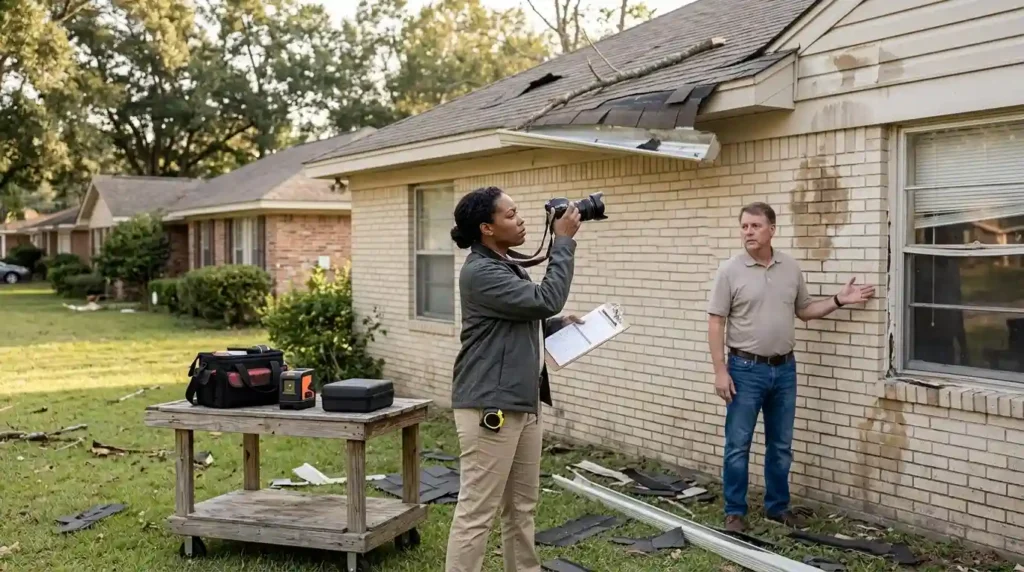
Accepting a fast settlement offer without confirming it covers your full loss is one of the most common mistakes. It is also one of the hardest to reverse, since many settlements include a release that closes out the claim entirely.
Not keeping a written record of phone conversations is a close second. A dispute months later often comes down to whose account of a call is better documented. No-fault claims work quite differently, as Michigan car insurance quotes show.
Waiting too long to act is another recurring issue, especially given the two-year bad-faith deadline. Many policyholders spend months trying to resolve things informally. By the time they act, much of that shorter window is already gone. Maryland, another contributory negligence state, sets its own rules, as Maryland car insurance quotes explain.
Choosing a well-rated insurer in the first place also helps. It reduces how often disputes happen at all. Our comparison of top-rated auto insurers explains what to check before you buy a policy, not just after something goes wrong.
Key Takeaways
Not every insurance denial in Alabama rises to bad faith. Understanding that difference is the first real step toward figuring out what to do next. If you’re unsure whether an insurer’s actions justify further legal review, an Alabama insurance claim lawyer can help assess the circumstances. Alabama’s bad faith standard goes back to Chavers v. National Security Fire and Casualty Co. in 1981. It deliberately protects an insurer’s right to dispute a genuinely unclear claim. That means the facts of your specific situation matter more than how the denial feels in the moment.
Document everything now, watch the two-year bad-faith deadline closely, and consider filing a state complaint or speaking with an attorney when appropriate. These steps can be complementary rather than something you wait to pursue as a last resort. This article provides general educational information, not legal advice, and does not create an attorney-client relationship or evaluate your individual case.
If you still have a question this guide has not answered, review your policy documents and claim correspondence first. A licensed Alabama attorney can evaluate the specific facts of your claim and explain what options may be available based on your circumstances.
Frequently Asked Questions
What counts as bad faith versus an ordinary denial in Alabama?
An ordinary denial has some legitimate or arguable basis, even if you disagree with it, while bad faith requires showing there was no such basis and the insurer knew it. This is a genuinely difficult legal standard to meet, and many disputed claims turn out to be ordinary coverage disagreements rather than bad faith.
How long do I have to act?
Generally two years for a bad faith claim and six years for a breach of contract claim, though the exact starting point depends on your specific facts. Given how much shorter the bad-faith window is, it makes sense to treat two years as your practical deadline.
What compensation is available beyond the claim amount?
A straightforward contract claim is generally limited to the policy benefit itself, while a successful bad faith claim can potentially include emotional distress and punitive damages, subject to Alabama’s statutory caps. Which damages actually apply depends entirely on the facts of your situation.
Do I need a lawyer, or can I resolve this myself first?
Many disputes get resolved by escalating to a supervisor or filing a state complaint, without ever requiring a lawyer. An attorney becomes more worth considering once the claim value is significant or the insurer’s reasoning seems clearly inconsistent with your actual policy.
How does ERISA change the process?
If your claim is governed by ERISA, typically through an employer-provided benefit plan, Alabama’s state bad faith tort generally does not apply, and a different federal appeal process and deadline structure take over instead. Confirm early whether ERISA applies to your specific plan, as it significantly affects your options.
What should I document starting today?
Your denial letter, every piece of correspondence, adjuster call logs with dates, and any repair, medical, or replacement cost documentation. This record is often what actually determines how a later dispute gets resolved.
When should I contact a lawyer?
You may consider contacting an attorney if your insurer denies, delays, or underpays a claim without a clear explanation. An attorney can review your policy, claim documents, and the insurer’s handling of the claim. They can also explain whether your situation may involve a coverage dispute or potential bad faith.

Michael Bennett is a U.S. insurance research and consumer education writer at Insurancebasics Hub, an independent resource dedicated to helping consumers understand insurance policies, coverage decisions, claims, and insurance-related consumer protections. His work covers auto, homeowners, renters, life, and other areas of insurance, with a focus on making complex insurance topics easier to understand.
Michael takes a research-focused approach to insurance content, using authoritative government and regulatory resources, state insurance department guidance, applicable insurance rules, policy provisions, and documented industry information. His articles examine important details such as coverage limits, deductibles, exclusions, policy conditions, premiums, claims, denials, cancellations, renewals, and state-specific requirements.
His goal is to provide accurate, transparent, and practical information that helps readers make better-informed insurance decisions. Insurancebasics Hub provides general educational information and does not replace individualized advice from a licensed insurance professional, attorney, financial professional, or other qualified adviser.
4 Responses