
Texas law sets the insurance floor at 30/60/25: $30,000 per person and $60,000 per accident in bodily injury liability, plus $25,000 in property damage liability. Personal injury protection comes with every policy unless you reject it in writing, and uninsured motorist coverage is optional rather than required.
Texas is an at-fault state, so whoever causes the crash pays for it. The rest of this guide walks through what that actually means for your wallet and how to read Texas car insurance quotes without missing the details that matter most.
The Short Answer First
If you only read one section, read this one. Texas requires 30/60/25 liability coverage and nothing more by law. PIP rides along by default, but you can drop it. Uninsured motorist coverage does not come automatically at all; you have to ask for it. And because Texas runs on a tort liability system rather than no-fault rules, fault has to be established before a claim gets paid, which can slow things down after a crash.
Everything below expands on that answer with the numbers, the trade-offs, and the situations where the state minimum stops being enough. If you are already holding a stack of quotes and trying to make sense of why they differ so much, the answer is almost always buried in one of these details rather than in the headline price.
Texas Car Insurance Requirements: Breaking Down the 30/60/25 Rule
Three numbers, three separate pots of money. $30,000 covers one injured person. $60,000 is the ceiling if more than one person gets hurt in the same accident. $25,000 covers the other vehicle or property, period, no matter how expensive it was.
Here’s where the arithmetic gets uncomfortable. A driver who totals a newer truck, easily worth $35,000 or more, will find that $25,000 does not come close. The at-fault driver owes the rest personally. This is not a hypothetical corner case in Texas, where full-size trucks and SUVs make up a large share of the vehicles on the road. Our guide on how to get liability car insurance explains how to choose higher limits.
- $30,000 bodily injury liability, per person
- $60,000 bodily injury liability, per accident
- $25,000 property damage liability
Texas car insurance requirements start and technically end with these three numbers, but “technically” is doing a lot of work in that sentence. Meeting the state’s requirements on paper and actually being financially protected after a serious crash are two different things, and the gap between them is exactly what the rest of this guide is about.
Nothing above the 30/60/25 floor is legally required, which is precisely why so many coverage conversations end with a driver deciding to buy more than the law demands.
PIP: The Coverage You Have Without Asking For It
Personal injury protection ships with every Texas policy automatically. You do not sign up for it. Instead, you would have to actively reject it in writing if you did not want it, which means plenty of drivers carry PIP without ever realizing they chose it.
What does it actually buy you? Medical bills and a slice of lost income after a crash are paid out regardless of fault. That last part matters because fault in Texas can take weeks to sort out, and medical providers rarely wait weeks to send a bill.
Rejecting PIP shaves a small amount off your premium. It also means that if you are injured in a crash where fault is disputed, you are waiting on someone else’s insurer, or your own health insurance, to cover you in the meantime.
A very different approach to medical coverage shows up once you look outside Texas. Delaware car insurance quotes cover a state where this same type of coverage is not optional at all, which says something about how much states disagree on what should be a legal requirement versus a default setting.
Why Uninsured Motorist Coverage Deserves a Second Look
Texas does not require uninsured or underinsured motorist coverage. It is available, and most agents will offer it, but nothing forces you to buy it. Given how many Texas drivers are on the road without any insurance at all, roughly one in seven, according to Insurance Information Institute figures cited across the industry, that gap is worth sitting with for a moment.
If someone without coverage hits you, your liability insurance is useless to you in that moment. It only pays for damage you cause to others. Uninsured motorist coverage is the only piece of a Texas policy built specifically to protect you from someone else’s decision to skip insurance. Our guide to an uninsured motorist lawsuit explains why suing an uninsured driver often recovers little.
Other states handle this default very differently. Colorado car insurance quotes walk through a system where this coverage is presumed included, and you have to reject it in writing to lose it, essentially flipping Texas’s approach on its head.
At Fault, Not No Fault: Why It Changes How Claims Work
Texas runs on a tort system. Someone is at fault, and that person’s insurer, or their own pocket, pays. No-fault states skip that step for medical bills and have each driver’s own insurer pay first, fault aside.
That distinction is not academic. It shapes how long a claim takes and how much documentation you will need. Police reports, witness accounts, and adjuster investigations all feed into a fault determination before the money moves. Being technically at fault does not automatically mean your insurer cuts a check the next day. It means the process of proving what happened starts. If the other driver had no insurance, our guide to finding a lawyer for a car accident with no insurance explains your options.
A state built the opposite way makes the contrast obvious. New Jersey car insurance quotes explain a true no-fault system, where mandatory medical coverage exists precisely so injured drivers are not stuck waiting on a fault dispute to get treatment paid for.
What Texas Car Insurance Quotes Actually Cost
Numbers here vary a lot depending on who is doing the counting. Full coverage has been reported anywhere from about $2,000 to $2,900 a year. Minimum liability estimates range even wider, from roughly $565 up to $1,690 annually. Neither range is wrong; they just come from different sample sizes and different assumptions about the driver being priced. Our guide to car insurance quotes explains why published averages differ so much.
This is exactly why quotes from three different insurers can look like they are describing three different states. The published averages are a starting point, not a prediction of what you personally will be offered once an insurer sees your actual driving record and vehicle.
| What You’re Buying | Reported Annual Range |
| Minimum liability only (30/60/25) | About $565 to $1,690 |
| Full coverage (liability + collision + comprehensive) | About $2,000 to $2,900 |
The gap between those two rows is not just a bigger number. It is the difference between a policy that ignores your own car completely and one that actually pays to fix or replace it.
Texas Auto Insurance Rates by City, Age, and Other Variables
Houston and Dallas tend to run above the state average, largely a function of traffic volume and claims frequency in dense metro areas. Smaller cities and rural counties usually see less of both, and that shows up in lower average premiums. Dense metros elsewhere show the same pattern, as New York car insurance quotes explain.
Age moves the number too. Drivers in their late teens and early twenties see the steepest premiums of any group, a reflection of accident statistics rather than any individual driver’s actual habits. Rates typically ease through the 30s, 40s, and 50s before a modest uptick returns for some older age brackets.
A market with a fraction of Texas’s population density illustrates just how much traffic volume alone can move a statewide average. Kentucky car insurance quotes cover exactly that kind of lower-density market, and comparing the two states side by side makes it obvious why Texas auto insurance rates in Houston rarely match what a driver in a small rural county would be quoted.

Two Coverage Levels, One Real Decision
Minimum coverage checks the legal box. Full coverage checks the legal box and protects your own vehicle. That is the entire distinction, but it is an important one.
Full coverage generally means liability plus collision, which repairs your car after you cause a crash, plus comprehensive, which handles theft, hail, flooding, and animal strikes. Texas’s exposure to hail and coastal storms in some regions makes that comprehensive piece more than a nice-to-have for drivers in those areas.
Minimum coverage can be a reasonable call for an older vehicle that is not worth much to repair. It stops making sense the moment you are still financing the car, since your lender will require full coverage regardless of what the state does or does not mandate.
A comparison worth running before you decide: if the monthly savings from skipping collision and comprehensive is smaller than what you would lose in a single bad month without them, the math does not favor going minimum.
Not every state leaves this decision as open-ended as Texas does. Michigan car insurance quotes cover a state where the mandatory minimum already bundles in substantial medical coverage, which changes how big a jump full coverage actually represents compared with what Texas requires by default.
What Actually Moves Your Rate
Four things matter more than everything else combined: your driving record, your credit history, your vehicle, and where you park it at night. Together, they explain most of the spread you will see across different quotes for what looks like the same driver on paper.
Driving Record
Clean record, lowest rate the insurer offers. One at-fault accident or a DUI, and rates can climb for three to five years before the incident ages off your file. Insurers generally look at that same three-to-five-year window on every renewal, so a violation does not haunt you forever, but it does not disappear quickly either. Look-back rules vary by state, as Alabama car insurance quotes show.
Credit History
Texas allows insurers to weigh your credit-based insurance score alongside age, gender, and marital status. Two drivers with identical driving records can end up with different premiums purely because of this factor, which is not true everywhere. Washington car insurance quotes cover a state that banned this practice outright back in 2021, a genuinely different regulatory stance from Texas’s.
If you are working on your credit for other reasons, a side benefit worth knowing about is that the improvement will likely show up in your premium at your next renewal, not just on your credit report. It is one of the few factors where a change you make for an unrelated reason quietly helps your rates too.
Vehicle and Location
A more expensive vehicle costs more to fix or replace, full stop. Your ZIP code layers on top of that, since insurers price by documented theft rates, accident frequency, and weather exposure specific to your area, not a single number for the whole state. If you drive for work, our guide to commercial auto insurance explains when a business policy applies.
Regional risk plays out differently depending on where you live, and that is true across state lines as well. Georgia car insurance quotes cover a state where weather and urban density shape pricing in ways that echo a lot of what happens between Texas cities.
Driving Uninsured: What It Actually Costs You
A first offense typically brings a fine between $175 and $350. Get caught again, and that range jumps to $350 to $1,000. Those are just the base fines.
The real cost shows up if you are uninsured and cause an accident. Expect registration and license suspension for up to two years, personal responsibility for 100 percent of the other driver’s medical bills and vehicle damage, and, in cases involving serious injury or death, fines up to $4,000 plus potential jail time. Vehicle impoundment for up to 180 days, with daily storage fees stacking on top, is also on the table for repeat offenders. If an insurer later disputes your claim, our Alabama insurance claim lawyer guide explains how disputes work.
An SR22 filing usually follows an uninsured accident, generally required for around three years, with any coverage lapse restarting that clock. Drivers who need one often get pushed toward nonstandard insurers because standard carriers are less willing to write their policies. Nevada car insurance quotes cover a state with its own dedicated safety net for exactly this kind of driver.
A Quick Math Example
Picture a Texas driver with nothing but the state minimum. They cause a wreck, injure one person to the tune of $45,000 in medical costs, and total the other car, valued at $32,000.
That one person’s $45,000 medical bill exceeds the $30,000 per-person cap, so the policy pays $30,000 and the driver owes the remaining $15,000. The $32,000 vehicle does not fit under the $25,000 property damage cap either. That $7,000 difference also comes straight out of the at-fault driver’s pocket, for $22,000 in personal exposure in total.
This scenario is illustrative, built from Texas’s actual minimum limits rather than a real claim file, but the math is exact. It is the kind of gap that convinces a lot of drivers to carry more than the legal floor once they actually run the numbers themselves. Florida drivers face an even thinner floor, as our guide to Florida car insurance quotes explains.
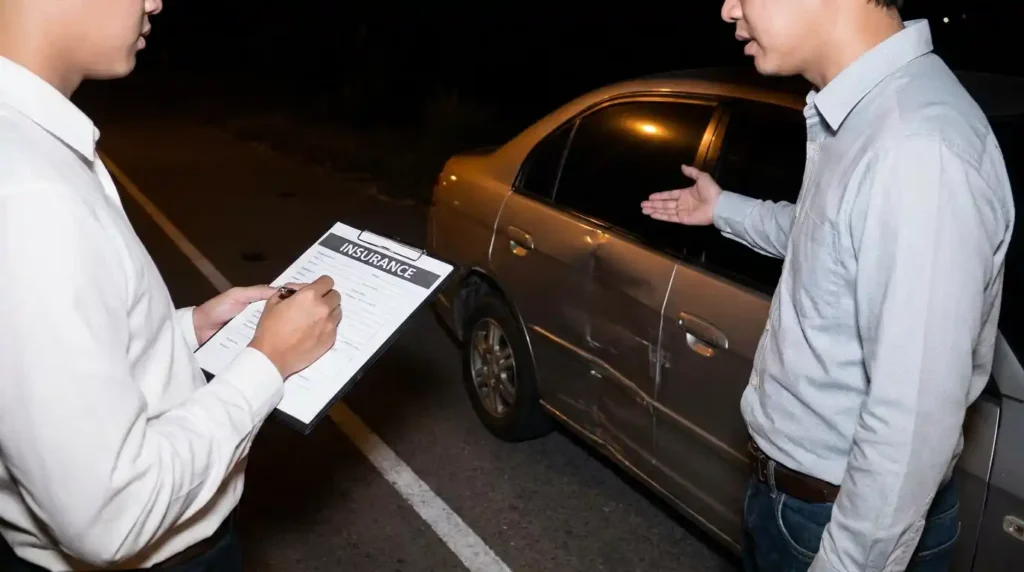
Shopping for Cheap Car Insurance Texas Drivers Can Trust
Cheap car insurance Texas drivers can actually rely on almost never comes from one dramatic discount. It comes from comparing several insurers side by side and stacking whatever smaller discounts you qualify for.
Discounts worth asking about:
- Bundling auto with a homeowners or renters policy
- Usage-based or telematics programs for safe drivers
- Defensive driving course completion
- Multiple vehicles on one household policy
- Paying the full premium up front
- Keeping continuous coverage with no lapse
Bundling alone has been reported to save anywhere from 5 to 25 percent, though that range depends entirely on the insurer and what you are bundling. None of these numbers are promises, just patterns worth checking against your own quotes. Some insurers also bundle life coverage, such as a $2 million dollar life insurance policy.
What to Have Ready Before You Request a Quote
A little preparation makes the entire shopping process faster and produces more accurate numbers on the first try. Before you call an insurer or fill out an online form, gather your driver’s license number, your vehicle identification number, your current mileage, and a record of any accidents or violations from the past three to five years.
Decide up front whether you are shopping for minimum liability or full coverage, and whether you plan to keep or reject PIP and uninsured motorist coverage. Walking into the comparison process with those decisions already made is what separates a genuinely useful set of quotes from a pile of numbers you cannot actually compare against each other. A driver who skips this step often ends up comparing offers that are not even pricing the same coverage.
Comparing quotes only works if you are comparing the same thing twice. A minimum liability quote against a full coverage quote tells you nothing useful, and neither does a $500 deductible against a $1,000 deductible. Hold every variable steady except price, and the real cheapest option becomes obvious fast.
Rules can shift underneath a comparison too, sometimes overnight. Louisiana car insurance quotes cover a state where a recent legal change reshaped what an at-fault accident costs a driver, proof that the underlying rules are worth rechecking even if your driving record hasn’t changed at all.
Who Offers the Best Car Insurance Texas Drivers Can Buy?
Not one company, and anyone claiming otherwise is oversimplifying. The best car insurance Texas drivers can get depends on their own record, their coverage needs, and, frankly, how much they care about price versus how a company handles claims. A driver with a clean record and a paid-off car will define “best” very differently than a driver with a recent DUI needing an SR22.
What is worth checking, regardless of who you’re comparing: financial strength ratings and complaint history through the state regulator. A slightly higher premium from a company that pays claims without a fight beats the cheapest option from one that doesn’t, and that trade-off is really what separates the best option from the merely cheapest.
If you’re cross-shopping Texas carriers against out-of-state carriers, remember that claims-handling reputation can vary by state, even within the same national company. What works well for a driver in one region does not automatically carry over, so a recommendation from a friend in another state is a starting point, not a guarantee.
Where This Leaves You
The state minimum is a legal floor, not financial protection. The math example above shows how fast a single accident can blow past the limits. Before you finalize any Texas car insurance quotes, know exactly which optional pieces you have kept and which ones you have quietly declined, because that decision matters more than the premium on the page.
For current requirements or to check an insurer’s licensing and complaint record, the Texas Department of Insurance is the direct source. When you compare quotes side by side, treat the state minimum as your starting point for the comparison, not your final decision.
Common Questions, Answered Directly
Is Texas at fault or not at fault?
At fault. The driver who causes the crash is financially responsible, full stop.
What’s the actual minimum coverage?
30/60/25. $30,000 per person and $60,000 per accident for bodily injury, $25,000 for property damage.
How much does insurance cost here on average?
Full coverage runs roughly $2,000 to $2,900 a year in most reported figures. Minimum liability runs lower, somewhere between about $565 and $1,690, depending on the source.
What happens if I get caught without insurance?
A first-offense fine between $175 and $350, rising to $350 to $1,000 for repeat offenses, plus possible suspension, impoundment, and an SR22 requirement if you’re in an accident while uninsured.
Do I need an SR22, and for how long?
Typically, after an uninsured accident, usually for about three years, and any lapse restarts that clock.
Does my lender require full coverage even though the state doesn’t?
Almost certainly, yes, if you are still financing or leasing the vehicle.
Does credit history really affect my rate here?
Yes. Texas permits it, unlike a small number of states that have banned the practice.
What discounts should I actually ask about?
Bundling, usage-based programs, defensive driving courses, multi-vehicle policies, and paying in full all show up consistently across insurers, though the exact savings differ by company.

Michael Bennett is a U.S. insurance research and consumer education writer at Insurancebasics Hub, an independent resource dedicated to helping consumers understand insurance policies, coverage decisions, claims, and insurance-related consumer protections. His work covers auto, homeowners, renters, life, and other areas of insurance, with a focus on making complex insurance topics easier to understand.
Michael takes a research-focused approach to insurance content, using authoritative government and regulatory resources, state insurance department guidance, applicable insurance rules, policy provisions, and documented industry information. His articles examine important details such as coverage limits, deductibles, exclusions, policy conditions, premiums, claims, denials, cancellations, renewals, and state-specific requirements.
His goal is to provide accurate, transparent, and practical information that helps readers make better-informed insurance decisions. Insurancebasics Hub provides general educational information and does not replace individualized advice from a licensed insurance professional, attorney, financial professional, or other qualified adviser.
One Response