
Yes, you can generally file an uninsured motorist lawsuit against the at-fault driver. But winning and collecting are different things. Many uninsured drivers have little money. That’s why most injured drivers start with their own uninsured motorist (UM) coverage, if they have it. A lawsuit is often a second path, not the first.
Here’s the problem with most advice online. It treats the claim and the lawsuit as one event. They’re not. They happen on different clocks, against different parties, with different limits.
So this guide follows the clock. It starts at the crash scene. It ends years later, when a judgment is collected or isn’t. At each stage, you’ll see what usually happens, what can go wrong, and what to check.
Why This Matters: The 2026 Numbers
The Insurance Research Council (IRC) estimates that 15.4% of U.S. drivers were uninsured in 2023. That’s about one in seven.
The IRC also found that 33.4% of drivers were either uninsured or underinsured in 2023. That combined rate has risen 10 percentage points since 2017.
| State Snapshot (2023, IRC via Triple-I) | Uninsured Rate |
| Mississippi (highest) | 28.2% |
| New Mexico | 24.1% |
| Florida | 20.6% |
| Colorado | 19.7% |
| Maine (lowest) | 5.7% |
What the numbers can’t tell you: The IRC doesn’t count uninsured cars directly. It estimates the rate by comparing UM claims with bodily injury claims. So treat these as strong estimates, not a head count. Michigan’s no-fault system handles uninsured crashes differently, as Michigan car insurance quotes explain.
The NAIC notes that 49 states and D.C. require auto liability insurance. Yet roughly one in seven drivers still go without it. The IRC links the rise partly to worsening insurance affordability. Comparing car insurance quotes with UM coverage included is the simplest protection.
Myth vs. Reality: Five Things People Get Wrong
| Myth | Reality |
| “If they hit me, they have to pay.” | A court can order payment. It can’t create money the driver doesn’t have. |
| “My insurance won’t help. It wasn’t my fault.” | UM coverage is designed for exactly this. You claim against your own policy. |
| “I’ll take the cash they offered at the scene.” | Settling without your insurer’s consent may hurt your UM rights under many policies. |
| “A UM claim and a lawsuit are the same thing.” | One is a contract claim with your insurer. The other is a negligence suit against the driver. |
| “I have years to decide.” | Policy notice deadlines can be much shorter than the state’s lawsuit deadline. |
Stage 1: The First Hour at the Scene
The first hour shapes everything later. Evidence disappears fast.
What to Do
- Call the police. A report helps prove fault and confirms the driver’s insurance status.
- Photograph everything. Cars, plates, the road, injuries, and the driver’s license if they allow it.
- Get witness names. Independent witnesses carry weight later.
- Get medical care. Even if you feel fine. Some injuries show up hours later.
The Cash Offer Trap
Here’s a situation insurers see often. The uninsured driver offers $500 in cash if you skip the police.
Taking it can backfire. You may lose the police report. And if you sign anything, it could be treated as a release. Many UM policies require your insurer’s consent before you settle with the at-fault driver. A quick $500 can put a much larger UM claim at risk.
Stage 2: The First 72 Hours
Confirm the Driver Is Really Uninsured
Don’t assume. Some drivers give an old policy card. Others name a policy that lapsed. Your insurer and the police report usually confirm coverage status.
If the driver had some insurance but too little, that’s an underinsured case. Different rules may apply.
Notify Your Own Insurer
This is the step people delay. Don’t.
Your policy likely has a “prompt notice” requirement. Late notice is a common reason UM claims run into trouble. Report the crash even if you haven’t decided what to do yet.
Open the Uninsured Motorist Accident Claim
An uninsured motorist accident claim is a first-party claim. That means you’re asking your own insurer to pay under your own policy. Your insurer then steps into the at-fault driver’s shoes for the purposes of the claim.
| What You Report | Why It Matters |
| Date, time, and location | Starts the claim record |
| Police report number | Proves the crash happened and supports fault |
| Driver’s name and plate | Lets the insurer verify coverage status |
| Injuries and treatment so far | Starts the medical record trail |
| Vehicle damage | Routes to UM property damage or collision |
Stage 3: Weeks 1 to 4 — Figuring Out What Your Policy Pays
Now you need to know what you actually bought. Pull your declarations page.
The Coverages That May Apply
| Coverage | What It Usually Pays | Watch For |
| UM bodily injury (UMBI) | Your medical bills, lost wages, and often pain and suffering | Per-person and per-accident limits |
| UM property damage (UMPD) | Damage to your car, in states where offered | Possible deductible; not available everywhere |
| Collision | Your car repairs, regardless of fault | Your collision deductible |
| MedPay or PIP | Medical costs, sometimes lost wages | Your insurer may offset these against UM |
| Health insurance | Medical treatment | The health insurer may seek reimbursement later |
Your Belongings Inside the Car
Here’s an overlooked detail. Auto policies generally cover the car, not the laptop or tools inside it.
Personal belongings are usually covered under a homeowners or renters policy instead. To see where personal property limits appear on a homeowners quote, our walkthrough of an Allstate homeowners quote breaks down each coverage line.
Renters often have off-premises coverage too. Our guide on whether USAA renters insurance covers storage units explains how off-premises limits usually work.
State Rules Change the Math
States treat UM very differently. Some require it. Others require insurers to offer it and let you reject it in writing.
According to the Triple-I, 20 states and D.C. have mandatory UM or UIM requirements. Here are two examples of the “offer and reject” model.
Colorado. Under C.R.S. § 10-4-609, as published, insurers must offer UM coverage equal to your bodily injury liability limits. You can reject it only in writing. Colorado’s statute also says UM coverage “shall not be reduced by a setoff from any other coverage,” including health insurance and medical payments.
That no-setoff rule is unusual. It can make Colorado UM more valuable than the same limit in other states. Our guide to Colorado auto insurance quotes explains how coverage choices shape prices there.
For a city-level look, our walkthrough of Denver car insurance quotes shows how one driver’s ZIP code and coverage choices shaped her price.
Florida. Under Fla. Stat. § 627.727, as published, policies must include UM coverage unless the named insured rejects it in writing. The rejection form must warn, in bold type: “You are electing not to purchase certain valuable coverage which protects you and your family.” Our guide to Florida car insurance quotes covers the state’s other requirements.
With a 20.6% uninsured rate, that rejection form matters in Florida. UM questions come up for motorhome owners too. Our guide to RV insurance quotes in Florida covers how RV policies are built and priced.
Stacking in One Paragraph
Stacking lets you combine UM limits across vehicles or policies. Two cars with $50,000 UM each might stack to $100,000. Some states allow it. Some insurers let you choose stacked or non-stacked coverage. Others prohibit it. Check your policy and state rules. Our guide on how to get liability car insurance explains how to match UM limits to your liability limits.
Stage 4: Months 2 to 6 — Working the Uninsured Motorist Claim

This is where most cases resolve. The uninsured motorist claim is handled by your own insurer. But that doesn’t mean the process is friendly.
What Your Insurer May Ask For
- A recorded statement
- Medical records and bills
- Proof of lost wages
- An independent medical exam
- Photos and repair estimates
You still generally need to prove the other driver was at fault. And you need to prove your injuries and their cost. Gaps in medical treatment are often used to argue that injuries were minor.
The Demand Package
Many claimants send a written demand once treatment ends or stabilizes. It lists medical costs, lost income, and other damages. Keep copies of everything you send. Claim deadlines vary by state, as our Alaska insurance claim lawyer guide explains.
If the Claim Is Denied or Underpaid
Read the denial letter carefully. Then check your policy’s dispute section. Many UM policies route disputes to arbitration. Others allow a lawsuit against your own insurer. Our New York insurance claim attorney guide explains how bad faith disputes work.
You can also file a complaint with your state Department of Insurance. That’s free. It doesn’t replace legal action, but it creates a record.
Stage 5: The Decision Point, Is an Uninsured Driver Lawsuit Worth It?
Your UM claim may cover everything. Or it may hit its limit. Either way, you’ll face a question: is an uninsured driver lawsuit worth it? The answer depends less on fault and more on the driver’s finances.
The Collectability Scorecard for Suing an Uninsured Motorist
Before suing an uninsured motorist, score the driver. Give one point for each “yes.”
| Question | Yes = 1 Point |
| Does the driver have a steady job with regular wages? | ☐ |
| Does the driver own a home or other real estate? | ☐ |
| Does the driver have bank accounts you could identify? | ☐ |
| Was the driver working or driving someone else’s car at the time? | ☐ |
| Was the driver intoxicated? (affects bankruptcy discharge) | ☐ |
| Is your loss larger than your UM limits? | ☐ |
- Score 0–1: A lawsuit may produce a judgment you can’t collect.
- Score 2–3: Possible, but weigh costs carefully.
- Score 4–6: A lawsuit may be more realistic. Talk with an attorney.
Why Collection Is the Real Question
A lawsuit can end in a court judgment. But a judgment is a piece of paper. Turning it into money takes more steps. And federal law limits what can be taken.
Under the federal Consumer Credit Protection Act, wage garnishment for ordinary debts is capped at the lesser of 25% of disposable earnings or the amount above 30 times the federal minimum wage. According to the U.S. Department of Labor, if weekly disposable earnings are $217.50 or less, nothing can be garnished.
Some states go further. Texas, for example, generally protects current wages from garnishment for ordinary debts under its state constitution. So a Texas judgment may have to be collected another way. State rules vary widely, as Louisiana car insurance quotes show.
The Bankruptcy Wildcard
An uninsured driver may file for bankruptcy. Many negligence judgments can be discharged.
But there’s an important exception. Under 11 U.S.C. § 523(a)(9), debts “for death or personal injury caused by the debtor’s operation of a motor vehicle” are not dischargeable “if such operation was unlawful because the debtor was intoxicated.” That makes an impaired-driving case more collectible than it first looks.
When Suing Probably Isn’t Practical
Here’s a realistic case where suing may not make financial sense.
Illustrative example: A driver earns about $250 a week in disposable pay and owns nothing. Your unpaid loss is $8,000. Under the federal formula, garnishment is capped at the amount above $217.50, so roughly $32.50 a week. Collection could take about five years, before court costs, interest rules, or the driver changing jobs. For many people, that isn’t worth the time.
Stage 6: Filing an Uninsured Motorist Lawsuit
If the scorecard points toward suing, here’s how a case usually moves.
Step-by-Step
- Check the deadline. Personal injury statutes of limitation commonly run for two or three years, but they vary by state. Your policy may also have its own shorter deadline for UM claims.
- Pick the court. Small claims court may fit property-damage-sized losses. Limits vary widely by state. Larger injury cases usually go to civil court.
- File the complaint. This names the driver and states what happened.
- Serve the driver. Uninsured drivers can be hard to find. Service rules vary.
- Discovery. Both sides exchange evidence and may take depositions.
- Settlement, mediation, or trial.
- Judgment and collection.
Protect Your UM Rights While Suing
Some states tie the lawsuit and the UM claim together. Georgia is a clear example. Maryland has its own UM rules, as Maryland car insurance quotes explain.
Under O.C.G.A. § 33-7-11(d), as published, when you sue a known driver, a copy of the action must be served on your UM insurer “as though the insurance company was actually named as a party defendant.” Missing that step can create serious problems for the UM claim.
That’s why suing without understanding your own policy is risky. The lawsuit and the UM claim can affect each other.
Subrogation: Your Insurer May Sue Too
After your insurer pays your UM claim, it may pursue the at-fault driver for reimbursement. That’s called subrogation.
It’s also why consent-to-settle clauses exist. If you release the driver without consent, your insurer may lose its right to recover. And that can affect your benefits.
Can You Do Both?
Often, yes. But you usually can’t collect twice for the same loss. Your insurer may claim offsets or reimbursement. Coordinate with your insurer or an attorney before settling anything.
Stage 7: Looking for Other People Who May Be Liable
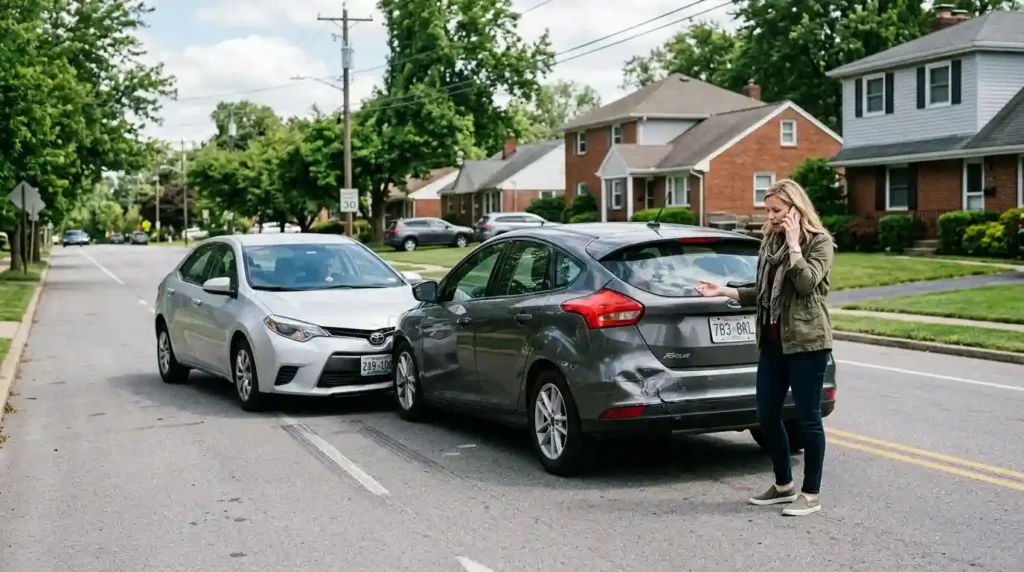
Suing becomes more realistic when someone else shares responsibility. This is where many cases change.
| Other Party | When They May Be Liable | Why It Matters |
| Employer | The driver was working at the time | Business policies may apply |
| Vehicle owner | The owner lent the car to an unsafe driver (negligent entrustment) | Owner’s policy or assets may apply |
| Bar or server | Served an obviously intoxicated driver, where dram shop laws exist | Business liability coverage |
| Parts maker | A defect contributed to the crash | Product liability claim |
| Government | Road design or maintenance defect | Strict notice rules and short deadlines often apply |
When the Vehicle Was a Work Truck
Crashes involving contractors’ vehicles often bring commercial policies into play. Those policies sit with different insurers and different claims departments. For an example of how one specialty insurance program separates its agent portal from its claims lines, see our guide to the US Assure agent login.
Stage 8: Year 1 and Beyond — Judgment, Collection, and Consequences
For the Injured Driver
A judgment can often last for years. Many states allow renewal. Interest may also apply. Rules vary by state, so check yours. Nevada car insurance quotes show how one state handles uninsured drivers after a crash.
For the Uninsured Driver
Driving uninsured carries consequences beyond any lawsuit. Many states suspend a driver’s license or registration after an uninsured crash or an unpaid judgment. Reinstatement often requires proof of future financial responsibility, usually an SR-22 filing.
Our review of the best SR-22 insurance companies explains how SR-22 filings work.
What If You Were Uninsured?
This is the contrarian part. Being the victim doesn’t always protect you if you are uninsured, too. Contributory-negligence states like Alabama add another hurdle, as Alabama car insurance quotes explain.
Some states have “no pay, no play” laws. California’s Proposition 213, passed in 1996 and codified at Civil Code § 3333.4, generally bars uninsured drivers from recovering non-economic damages like pain and suffering. There are exceptions, including when the at-fault driver was drunk. Check your state’s rules.
Three Drivers, Three Outcomes
These scenarios are illustrative. They show how the same type of crash can end differently.
Driver A has $100,000 UM coverage. Her injuries total $40,000. Her UM claim covers the loss after documentation. She never sues. Her insurer later pursues the at-fault driver through subrogation.
Driver B has $25,000 UM coverage. His injuries total $70,000. UM pays its $25,000 limit. He considers suing for the remaining $45,000. The driver works full time and owns a home. The scorecard says a suit may be realistic. He consults an attorney first, with his insurer’s consent rules in mind.
Driver C rejected UM coverage to save money. Her injuries total $30,000. Her health insurance covers treatment, minus deductibles. The at-fault driver has no job and no assets. A lawsuit would likely produce an uncollectible judgment. The rejected coverage was the real loss here. Families can also close income gaps with life coverage, such as a $2 million dollar life insurance policy.
How Much UM Coverage Makes Sense?
There’s no single right number. But here’s a simple framework.
- Match your liability limits. Many states and insurers use this as the default offer.
- Consider your health insurance. High deductibles leave bigger gaps.
- Consider your income. Lost wages can exceed medical bills.
- Ask about stacking. It may raise available coverage.
Some insurers also offer UM or UIM as an option on umbrella policies. Ask before you assume it’s included. Our guide to home insurance quotes in Rhode Island explains how umbrella policies sit above home and auto limits.
When Higher Limits May Not Pay Off
A non-obvious point. If you have strong health insurance, disability coverage, and paid leave, very high UM limits may add less than expected. But UM often covers pain and suffering, which other coverage doesn’t. Weigh both sides. No-fault states change this math, as New York car insurance quotes explain.
What to Ask Your Insurer: A Simple Script
Use these questions when you call about a UM claim. They’re also worth asking before you sue:
- “What are my UM bodily injury and property damage limits?”
- “Is my UM coverage stacked or non-stacked?”
- “Will you offset MedPay, PIP, or other payments against UM?”
- “What’s the deadline for notice and for filing a UM claim under my policy?”
- “Do I need your written consent before settling with the at-fault driver?”
- “Does my policy require arbitration for UM disputes?”
- “Will this claim affect my premium at renewal?”
Write down the answers, the date, and the representative’s name.
Looking Ahead
The IRC’s data shows the combined uninsured and underinsured rate rising steadily since 2017. If affordability pressure continues, that trend may continue too. That’s a reasonable expectation, not a confirmed forecast. Either way, the practical takeaway doesn’t change: UM coverage is often the most reliable source of payment after an uninsured crash.
The Bottom Line
An uninsured motorist lawsuit is possible in most cases. But it’s rarely the first or easiest path. Your own UM coverage usually comes first. A lawsuit makes the most sense when the driver, or someone connected to them, can actually pay.
Your one best next step: pull your auto policy’s declarations page today and find your UM limits. If you see “rejected” or a very low number, ask your insurer what higher limits would cost before you need them.
Frequently Asked Questions
Can you sue someone who doesn’t have car insurance?
Generally, yes. A lawsuit like this is a civil negligence case against the driver. Whether you can collect depends on the driver’s income and assets.
What’s the difference between a UM claim and a lawsuit?
A UM claim is filed with your own insurer under your policy. A lawsuit is filed in court against the driver. You may be able to pursue both, but you usually can’t collect twice for the same loss.
Is suing the driver worth it?
It depends on collectability. If the driver has wages, property, or an employer who shares liability, a suit may be realistic. If not, a judgment may go uncollected.
Does UM coverage pay for pain and suffering?
In many states, UM bodily injury can include non-economic damages like pain and suffering. Your policy language and state law control.
What happens if I win the lawsuit?
You get a judgment. Collection may then involve wage garnishment, bank levies, or property liens, within federal and state limits.
How long does a UM claim take?
Simple claims may be resolved within a few months. Disputed claims, arbitration, or lawsuits can take a year or longer.
Will my rates go up after a UM claim?
Insurers generally treat not-at-fault UM claims differently from at-fault accidents. But renewal practices vary. Ask your insurer directly.
What if it was a hit-and-run?
Many UM policies treat an unidentified hit-and-run driver as uninsured. Prompt police reporting is often required. Some policies or states also have physical-contact rules.

Michael Bennett is a U.S. insurance research and consumer education writer at Insurancebasics Hub, an independent resource dedicated to helping consumers understand insurance policies, coverage decisions, claims, and insurance-related consumer protections. His work covers auto, homeowners, renters, life, and other areas of insurance, with a focus on making complex insurance topics easier to understand.
Michael takes a research-focused approach to insurance content, using authoritative government and regulatory resources, state insurance department guidance, applicable insurance rules, policy provisions, and documented industry information. His articles examine important details such as coverage limits, deductibles, exclusions, policy conditions, premiums, claims, denials, cancellations, renewals, and state-specific requirements.
His goal is to provide accurate, transparent, and practical information that helps readers make better-informed insurance decisions. Insurancebasics Hub provides general educational information and does not replace individualized advice from a licensed insurance professional, attorney, financial professional, or other qualified adviser.