
Kentucky requires drivers to carry 25/50/25 liability coverage, or a $60,000 combined single limit, plus $10,000 in Personal Injury Protection called Basic Reparation Benefits. Kentucky uses a choice-no-fault system, meaning you can reject PIP in writing, and uninsured motorist coverage is included automatically unless you also reject that in writing. Unlike most states, Kentucky generally does not require an SR22 filing after a DUI.
That is the short version. Kentucky car insurance quotes vary widely between publishers, and that gap is worth understanding before you request your own. Kentucky’s choice of a no-fault setup is also unusual, and it helps to see how a plain at-fault state works for contrast. Our guide to Arizona car insurance quotes shows that model.
The rest of this guide explains why published averages disagree so much, what the law actually requires, and how to compare quotes without missing a real coverage gap.
What Do Kentucky Car Insurance Quotes Actually Show
A quote is an estimate, not a locked price. It reflects your stated driving record, address, and coverage choices, but the final premium can shift once the insurer verifies everything through underwriting.
Quote vs Policy vs Bound Coverage
A quote is a price estimate. A bound policy is the actual contract that takes effect once you agree to the terms and pay. Treat every quote as a starting point until you have a declarations page in hand.
What Is Inside a Typical Quote
A typical quote generally includes your liability limits, your PIP choice, any uninsured motorist decision, your deductible on collision and comprehensive if you add them, and any discounts applied. Missing even one of these makes two quotes impossible to compare fairly.
Why the Same Driver Gets Different Quotes
Published average costs for Kentucky disagree because every source builds a different sample driver. One report might use a 35-year-old with a clean record. Another might use a completely different age, coverage tier, and deductible. Neither number is dishonest, but neither applies to you either. Our guide to car insurance cost explains how these averages are built.
What this means for you: ignore any single published average entirely. Request your own quotes using your real information, then compare them against each other, not against a statewide figure from an article you read. A car insurance calculator can give you a rough starting estimate.
Kentucky Car Insurance Requirements: What the Law Requires
Kentucky car insurance requirements are shaped by a genuinely unusual no-fault system that gives drivers more choice than most states allow.
Minimum Liability Limits
The state minimum is commonly described as 25/50/25, meaning $25,000 in bodily injury liability per person, $50,000 per accident, and $25,000 in property damage liability per accident. Drivers can alternatively choose a $60,000 combined single limit policy instead of the split limits.
These numbers satisfy the legal requirement to register and drive. A single serious injury claim can exceed $25,000 easily, so minimum coverage often leaves a real gap once a crash gets expensive.
Is Kentucky a No-Fault State? Choice No Fault Explained
Kentucky runs a no-fault system under the Motor Vehicle Reparations Act. Most drivers carry Basic Reparation Benefits, also called PIP, which pays your own medical bills and lost wages regardless of fault.
This differs from a mandatory no-fault state, where drivers cannot opt out of PIP. Our guide to Florida car insurance quotes shows how that structure works in practice.
What PIP Covers
Basic Reparation Benefits pay a minimum of $10,000 per person for medical expenses, lost wages up to a set weekly cap, replacement services, and certain survivor benefits after a covered accident. These payments happen regardless of who caused the crash.
Rejecting PIP in Writing and What It Changes
You can reject Basic Reparation Benefits and the associated tort limitations through a specific form filed with the Kentucky Department of Insurance. Doing so generally means you give up the no-fault benefit and rely instead on suing the at-fault driver directly, which shifts real risk onto you if that driver is uninsured.
Decision checkpoint: rejecting PIP can lower your premium, but it removes a guaranteed source of quick medical payment after an accident. Before rejecting it, consider how quickly your own health insurance would actually respond after a serious crash.
Guest PIP
If every member of your household rejects PIP, Kentucky still requires a reduced form called guest PIP to protect passengers and pedestrians who were not part of that decision. This detail is easy to miss and rarely explained clearly elsewhere. Delaware also requires PIP, as covered in our guide to Delaware car insurance quotes.
Uninsured Motorist Coverage Offered, Not Always Required
Uninsured motorist coverage is actually included automatically in every Kentucky auto policy under KRS 304.20-020, unless the named insured rejects it in writing. This is a meaningful nuance, since some sources describe it as simply optional rather than automatic unless declined.
Given that a meaningful share of Kentucky drivers carry no insurance at all, keeping this coverage rather than rejecting it protects you specifically against that risk. One frequently cited figure puts Kentucky’s uninsured driver rate near 13.9 percent, based on Insurance Research Council data from 2019, though that figure is dated and should be checked against a current estimate rather than repeated as today’s number. Uninsured driver risk varies widely by state, as Alaska car insurance quotes show.
Proof of Insurance and Penalties for Driving Uninsured
Kentucky verifies insurance electronically and at registration, and driving without it carries real consequences. A first offense generally brings a fine between $500 and $1,000, up to 90 days in jail, or both, along with registration revocation.
A second offense within five years raises the stakes considerably, with fines up to $2,500 and up to 180 days in jail. Courts have some discretion to reduce penalties if you can show proof of a paid policy afterward.
Does Kentucky Require an SR22?
Kentucky is one of a small group of states that generally do not require an SR22 filing after a DUI or other serious violation, unlike most of the country. This surprises many drivers researching the state’s rules, since SR22 filings are the norm elsewhere. Most states, including the one covered in Arkansas car insurance quotes, follow the standard SR22 approach.
One narrow exception exists. If you apply for a limited or hardship driving privilege during a suspension, the court may require an SR22 as a condition of that specific privilege. Outside that situation, expect higher premiums after a serious violation rather than a formal filing requirement.
What Affects Kentucky Auto Insurance Rates
Factors You Can Control
Your deductible choice, your PIP and uninsured motorist decisions, your discounts, and how carefully you compare quotes are all within your control. These decisions shape your final Kentucky auto insurance rates more than almost anything else on the policy. Bundling with a home policy, such as an Allstate homeowners quote, can also lower your total cost.
Factors You Cannot Control
Your age, your location, and your credit-based insurance score all factor into pricing regardless of your choices. Insurers weigh these because they correlate with claim frequency, even though you cannot change them directly. Location-based pricing works the same way in other states, as Colorado auto insurance quotes show.
Where You Live: Louisville vs Lexington vs Rural Areas
Louisville typically carries higher average rates than Lexington or rural parts of the state, reflecting traffic density and claims frequency in a larger metro area. Rural counties generally see lower averages, though individual pricing still depends on your specific ZIP code and driving history. Big-city gaps show up elsewhere too, as Denver car insurance quotes reveal.
One competitor source, Freeway Insurance, reports Louisville averaging roughly $257 a month for full coverage and $84 a month for liability only, against roughly $153 and $52 for Lexington. That source did not publish a clear methodology date, so treat these figures as a directional example of the city gap rather than a current number, and confirm anything close with a fresh quote.
Credit-Based Insurance Score
Kentucky permits insurers to use a credit-based insurance score as one rating factor, unlike some states that have restricted this practice. A stronger score generally supports lower rates, while a weaker score can raise them even with a clean driving record. Washington has taken a stricter approach, as Washington car insurance quotes show.
Average Rates by Coverage Level
Minimum vs Full Coverage
| Coverage Level | What It Includes | What It Leaves Out |
| Minimum (25/50/25 plus PIP) | Liability and basic medical benefits | Your own vehicle after a crash |
| Full coverage | Liability, PIP, collision, comprehensive | Nothing structural, subject to limits and deductibles |
Full coverage is not a legally defined term, so different publishers build it differently. Always confirm the exact deductible and limits attached to any full coverage quote before comparing prices.
Why Published Averages Do Not Match Your Quote
Reported statewide averages for Kentucky have varied by more than a thousand dollars a year across different publishers, largely because each one assumes a different driver profile, deductible, and coverage tier. Treat every published number as an illustration of methodology, not a prediction of your own bill. The same gap between sources appears in Colorado car insurance quotes.
Reported Average Costs From Different Sources
Here is exactly why one average is not enough. Each of these figures comes from a different publisher, using a different sample driver and a different date, and none of them should be read as the current statewide truth.
| Source and Date | Full Coverage | Minimum Coverage |
| Dairyland, October 2024 | $2,705 per year | $779 per year |
| Freeway Insurance | $2,855 per year | $773 per year |
| NerdWallet, September 2026 | $3,259 per year | $831 per year |
| U.S. News (page one) | $2,721 per year | Not specified |
| U.S. News (page two) | $2,500 per year | $546 per year (USAA cited as lowest) |
The gap between $546 and $831 for minimum coverage, or between $2,500 and $3,259 for full coverage, comes entirely from methodology. Different ages, ZIP codes, deductibles, and vehicles produce different numbers even when the underlying insurance market has not changed at all. Verify any figure you rely on against a current source before treating it as fact, since even these numbers will age quickly.
Rates by Age and Driving Record
Age and driving record move the number more than almost anything else on this list. According to a NerdWallet analysis published in September 2026, Shelter was the cheapest full coverage option found for a 35-year-old with a clean record at roughly $2,034 a year, while State Farm was the cheapest minimum coverage option at roughly $453 a year for the same profile.
A separate U.S. News analysis of a mid-level coverage tier found USAA around $1,533 a year and Travelers around $1,768 a year for their own sample driver.
These figures are not interchangeable, and none of them describe a teen driver, a driver with a recent accident, or a driver with poor credit. A teen driver in Kentucky will generally see a premium several times higher than any of these adult sample figures, regardless of which publisher’s baseline you compare it to.
How to Lower Your Premium Without Cutting Necessary Coverage
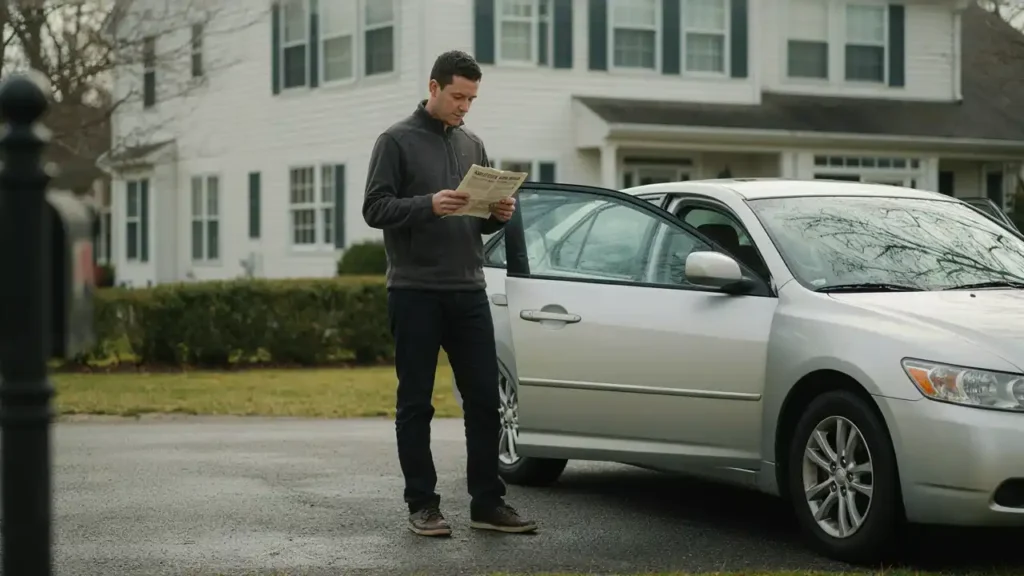
Searches for cheaper coverage usually come down to one real question. How do you lower the bill without leaving yourself exposed if something serious happens?
Discounts to Ask About
Common discounts include bundling home or renters insurance, paying in full, paperless billing, autopay, good student status, defensive driving completion, and anti-theft equipment. Ask directly, since insurers do not always apply every discount automatically, and working through this list is usually how cheap car insurance Kentucky drivers keep it that way at renewal, too. If you are shopping for home coverage as well, our guide to home insurance quotes in Rhode Island shows how home pricing works.
Cheap Car Insurance Kentucky Drivers With a Ticket or DUI Can Look At
A ticket or at-fault accident generally raises your premium at renewal, and a DUI conviction pushes many drivers toward higher-priced insurers. Since Kentucky generally skips the SR22 filing requirement, the path back to normal pricing here is mostly about time and a clean record going forward rather than a formal certification process.
Options for Young and Senior Drivers
Young drivers typically see the highest premiums due to limited history, and adding a teen to an existing family policy is usually cheaper than a standalone policy. Senior drivers often benefit from decades of experience, though very advanced age can raise rates again depending on the insurer.
If You Cannot Find Coverage: Kentucky Automobile Insurance Plan
The Kentucky Automobile Insurance Plan, known as KAIP, exists for drivers who cannot find coverage in the standard voluntary market. It guarantees access to the state-required minimum coverage, generally at a higher price than a standard policy, and it functions as a genuine safety net rather than a penalty.
Applications typically go through a licensed agent rather than directly through KAIP itself, and the plan’s own site at kyinsplans.org lists the requirements and the process for getting placed. Being placed in KAIP is not permanent. Most drivers can shop the voluntary market again after a clean period of a few years.
How to Judge the Best Insurer in Kentucky
Price, Coverage, Service, and Complaints
There is no single answer to which company offers the best coverage statewide, since rankings weigh price, customer satisfaction surveys, and complaint data differently depending on the publisher. A cheap premium from an insurer with a poor complaint record is not necessarily a good deal.
How Rankings Are Built
Different publishers weight premium, survey results, and complaint index differently when naming a top pick, which is why rankings disagree from site to site. Understanding the methodology matters more than the label itself. Our roundup of the best car insurance companies explains these trade-offs.
Best Car Insurance Kentucky Drivers Can Match to Their Profile
The right insurer is usually the one that fits your specific PIP choice, your uninsured motorist decision, and your driving profile, not the insurer with the biggest advertising budget. Compare complaint history and financial strength alongside price before deciding.
How to Get Quotes Step by Step
Gather What You Need
Collect your driving record, your vehicle information, and a clear sense of your PIP and uninsured motorist preferences before requesting quotes. Having this ready speeds up the process and reduces the chance of a repricing surprise later. Our guide on how to get car insurance walks through the full process.
Build a Like-for-Like Comparison
- Confirm the liability limits on each quote.
- Confirm whether PIP was accepted or rejected on each quote.
- Confirm whether uninsured motorist coverage is included or rejected.
- Match any collision and comprehensive deductibles.
Skipping this process is the top reason people think they found the best car insurance Kentucky has to offer, only to discover the cheap quote had rejected coverage they did not notice.
Protect Your Data When Requesting Quotes
Getting a quote is only the first step. What you do with it afterward matters just as much.
Some comparison sites exist mainly to collect your information and sell it to multiple agents, which can lead to a flood of follow-up calls. Read the privacy disclosure before submitting your details to any site you do not recognize.
What to Have Ready Before You Start
Gathering this ahead of time turns a slow, repetitive process into a quick one.
- Your driver’s license number and years licensed
- Your vehicle’s year, make, model, and VIN
- Your current insurer and policy expiration date, if you have one
- Your PIP and uninsured motorist preference, decided in advance
- The names and birthdates of every household member who drives the vehicle
After You Get Quotes: Switching, Renewing, and Cancelling
Getting a quote is only the first step. What you do with it afterward matters just as much.
If you decide to switch insurers, avoid letting your old policy lapse before the new one starts. Kentucky requires continuous proof of insurance, and even a short gap can complicate registration or trigger a penalty if you are stopped during that window.
Cancelling mid-term sometimes carries a short-rate fee depending on the insurer, so ask directly what cancelling early actually costs before you commit to a switch date. At renewal, compare your new premium against a couple of fresh quotes rather than assuming your current insurer is still competitive, since renewal pricing can drift upward over a few years without any change in your driving record.
Glossary of Terms Used in This Guide
- Basic Reparation Benefits (BRB): Kentucky’s name for PIP, the no-fault benefit that pays your own medical bills and lost wages regardless of fault.
- Choice no-fault: Kentucky’s system that lets drivers accept or reject PIP and the tort limitations that come with it.
- Combined single limit (CSL): A $60,000 alternative to the split 25/50/25 limits, covering both bodily injury and property damage under one shared cap.
- Guest PIP: A reduced no-fault benefit that applies to passengers and pedestrians when every household member has rejected standard PIP.
- Tort threshold: The dollar or injury severity level that must be met before an injured party can sue an at-fault driver directly, rather than relying only on PIP.
- Uninsured motorist coverage: Protection that pays your damages when the at-fault driver has no insurance at all, included by default in Kentucky unless rejected in writing.
How Much Coverage Do You Need Beyond the State Minimum
When 25/50/25 Falls Short
Minimum liability limits can be exhausted quickly in a serious crash involving a newer vehicle or significant injuries. Since Kentucky’s tort threshold only opens the door to a lawsuit once medical bills exceed $1,000 or the injury is serious, drivers below that minimum coverage often absorb costs personally that a higher limit would have covered.
When to Add Collision, Comprehensive, or Higher Limits
Lenders and lessors almost always require collision and comprehensive coverage, which removes the decision for many drivers automatically. If you own your vehicle outright and it carries little value, minimum coverage may be a reasonable financial choice instead. Drivers in other states face the same choice, as California car insurance quotes show.
Minimum vs. Full Coverage: A Worked Example
Numbers make this decision clearer than definitions do. Here is an illustrative scenario, not an actual claim or quote, built to show how the math actually works.
Imagine a Louisville driver carrying the 25/50/25 minimum with $10,000 in PIP. They cause an accident that leaves the other driver with $32,000 in medical bills and $6,000 in vehicle damage. Their bodily injury liability of $25,000 per person falls $7,000 short of the medical bill total, and that remaining $7,000 becomes their personal financial responsibility unless they carry higher limits or have personal assets to draw on.
Now imagine the same driver carried 100/300/50 liability instead. The $100,000 per person limit would have covered the $32,000 medical bill in full, with no personal exposure left over. The premium difference between these two limit levels is generally modest compared to the exposure gap it closes.
Deductible Trade-Off Math
A deductible works the same way in reverse. If your comprehensive deductible is $500 and a covered claim for a cracked windshield and hail damage totals $2,200, your insurer pays $1,700, and you pay the $500 deductible yourself.
Raising that deductible to $1,000 typically lowers your premium by some amount each year, but it also doubles what you pay out of pocket on that same claim. The relevant question is not which deductible is cheaper month to month. It is whether you can comfortably cover the higher deductible in cash on the day a claim happens.
Common Mistakes When Comparing Quotes
Comparing Different Limits or PIP Choices
This is the single most common mistake in quote shopping here. A quote built around rejected PIP and rejected uninsured motorist coverage will always look cheaper than one that keeps both, and comparing them tells you nothing useful.
Rejecting PIP or UM Without Understanding the Tradeoff
Both rejections are legal, and both save money, but both shift real financial risk onto you personally. Understand exactly what you are giving up before signing either rejection form.
Trusting Stale or Unsourced Averages
Kentucky’s statute of limitations for a motor vehicle injury claim is two years under KRS 304.39-230, running from the accident date or the date of your last PIP payment, whichever comes later. That is notably longer than Kentucky’s general one-year deadline for most personal injury claims, a distinction worth knowing if a dispute ever follows your accident.
Conclusion: Compare Kentucky Quotes With a Clear Checklist
Getting fair quotes here depends on understanding the state’s no-fault system before you compare a single price. The PIP and uninsured motorist decisions shape your real financial exposure far more than any headline premium number does.
Review your driving record and decide your PIP and uninsured motorist preferences first. Then request Kentucky car insurance quotes from several insurers using those same choices, so you are comparing price against price, not price against a thinner policy.
For official requirements and consumer resources, the Kentucky Department of Insurance publishes current PIP rejection forms and complaint procedures. For registration and license reinstatement rules, check with the Kentucky Transportation Cabinet. For another way a state structures fault and payment after a crash, see our guide to Louisiana car insurance quotes.
Frequently Asked Questions
What coverage does a new Kentucky resident need?
New residents must carry 25/50/25 liability coverage or the $60,000 combined single limit, plus $10,000 in PIP, before registering a vehicle in Kentucky.
How do I find a cheaper rate in Kentucky?
Compare quotes with matched PIP and uninsured motorist choices, ask about every available discount, and review your policy at each renewal rather than letting it auto-renew unchecked. That habit is really the recipe for lower rates in the long term.
Which company is best for teen drivers in Kentucky?
There is no single best answer, since pricing and discounts for teen drivers vary by insurer. Compare complaint records and multi-car discounts across at least three companies before deciding.
Are car insurance rates in Kentucky going up?
Rates move with claims trends, credit factors, and driving records across the state, so any single trend line quickly goes stale. Request a current quote rather than relying on a published trend.
Is full coverage required in Kentucky?
No. Full coverage is not a legal requirement, though lenders and lessors generally require collision and comprehensive coverage on financed or leased vehicles.
Can I reject PIP in Kentucky?
Yes, through a written rejection form, though doing so also gives up the associated tort limitations and shifts more risk onto you personally after an accident.
Does Kentucky require an SR22?
Generally no. Kentucky is one of the states that does not require SR22 filings after a DUI, though a limited driving privilege application can trigger a similar requirement in specific cases.
Does a quote affect my credit?
Requesting a quote typically uses a soft inquiry that does not affect your credit score, though confirm this directly with each insurer since practices can vary.

Michael Bennett is a U.S. insurance research and consumer education writer at Insurancebasics Hub, an independent resource dedicated to helping consumers understand insurance policies, coverage decisions, claims, and insurance-related consumer protections. His work covers auto, homeowners, renters, life, and other areas of insurance, with a focus on making complex insurance topics easier to understand.
Michael takes a research-focused approach to insurance content, using authoritative government and regulatory resources, state insurance department guidance, applicable insurance rules, policy provisions, and documented industry information. His articles examine important details such as coverage limits, deductibles, exclusions, policy conditions, premiums, claims, denials, cancellations, renewals, and state-specific requirements.
His goal is to provide accurate, transparent, and practical information that helps readers make better-informed insurance decisions. Insurancebasics Hub provides general educational information and does not replace individualized advice from a licensed insurance professional, attorney, financial professional, or other qualified adviser.
One Response