
Washington RV insurance depends on what you own. A motorhome registered in Washington must carry liability of at least 25/50/10, according to the Washington Department of Licensing. A travel trailer has no state insurance mandate, but the tow vehicle needs liability coverage, and lenders typically require physical damage coverage on financed units.
Most owners search this topic with one worry: “Am I covered, or will I find out I’m not?” The answer shifts with the type of RV, the season, and where it’s parked.
This guide follows the Washington year instead of a generic checklist. Wet winters, windstorms, eastern-side wildfire season, and border trips each change which coverage matters. Cost figures come from Progressive’s published Washington data and are labeled as one carrier’s numbers, not a market average.
Do You Need Coverage? A Quick Check
Your RV type sets your legal baseline. A motorhome carries its own liability requirement, while a towable follows the vehicle pulling it. Everything above that comes from a lender, a campground, or your own tolerance for loss.
| Factor | Motorhome | Travel trailer, fifth wheel, pop-up |
| State-required liability | Yes, 25/50/10 if registered in Washington | No standalone mandate |
| Liability while moving | Its own policy | Tow vehicle’s policy, while hitched |
| Theft, storm, collision damage | Optional by law; lenders usually require it | Same |
| Parked or unhitched | Comprehensive keeps working if carried | Tow vehicle’s liability may stop applying |
The Department of Licensing treats failure to show proof of insurance as a traffic infraction and cites RCW 46.30.020. Confirm the current limits on the DOL page before relying on them, since older legislative analyses discuss raising the property-damage minimum.
Washington Motorhome Insurance: Limits and Liability Gaps
A motorhome is treated like any registered vehicle, so the state minimums apply. Those minimums are low for a vehicle this size, which is why Washington motorhome insurance usually starts at the legal floor and builds up from there.
What 25/50/10 means
The numbers are $25,000 for one person’s injuries, $50,000 for all injuries in one accident, and $10,000 for property damage. They cap what your insurer pays others when you cause a crash. Whatever exceeds the caps falls to you.
Where the gap shows up
Suppose a motorhome driver in Tacoma rear-ends an SUV, injuring two people with medical bills of $60,000 and $30,000, and the SUV needs $24,000 in repairs (illustrative). At 25/50/10:
- Person one: capped at $25,000, leaving $35,000 unpaid
- Person two: capped at $25,000, leaving $5,000 unpaid
- SUV repairs: capped at $10,000, leaving $14,000 unpaid
That is $54,000 of exposure. One Washington agency page recommends 100/300/100 limits but doesn’t source the figure, so treat it as one view, not a standard.
Decision checkpoint: If the state minimum is the number on your declarations page, the question is whether you could pay the gap above it. That’s the question that sends people toward higher limits or an umbrella policy.
UM/UIM and physical damage
Uninsured and underinsured motorist coverage pays for your injuries when the at-fault driver has no insurance or too little. I believe Washington insurers must offer it, with rejection done in writing, but I haven’t confirmed the current rule, so check with the Office of the Insurance Commissioner. For what disputes over this coverage can look like, read our guide to how an uninsured motorist lawsuit works.
Physical damage means comprehensive (theft, storms, falling trees, fire) and collision. Both are optional by law and usually mandatory under a loan.
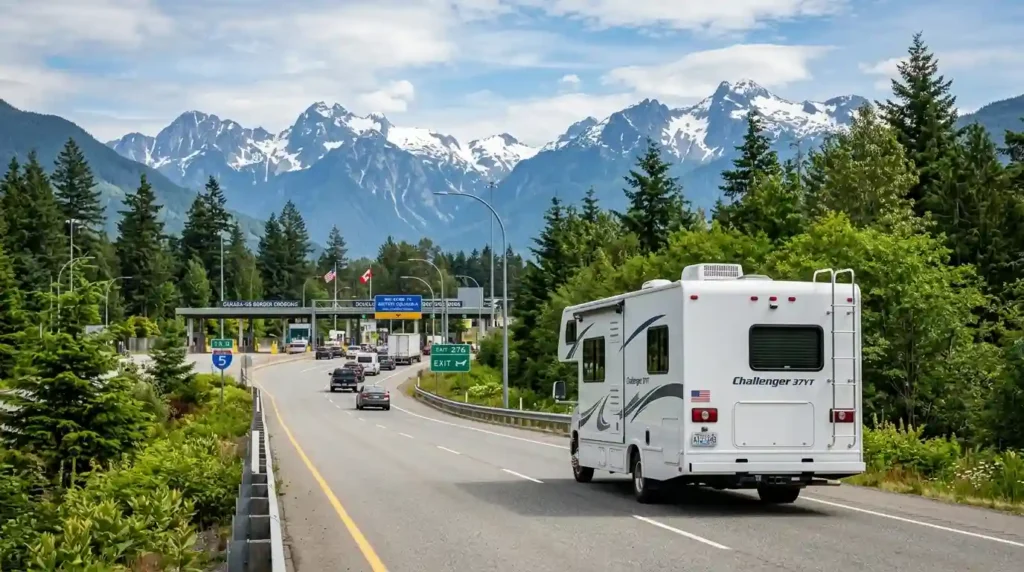
Travel Trailer Insurance Washington: Who Pays for the Trailer?
Your tow vehicle’s liability generally covers harm the trailer causes while hitched. It does not repair the trailer. Progressive says Washington has no state insurance requirement for a travel trailer, and lenders typically require coverage if you finance or lease.
Picture a trailer swaying on Snoqualmie Pass and clipping another car. The tow vehicle’s liability responds, and its limits apply. A large fifth wheel behind a truck insured at the minimum can create the same $54,000-style gap described above.
Once you unhitch, it gets less clear. Whether any liability continues depends on the carrier, so ask directly.
Lenders usually require comprehensive and collision and name themselves as loss payee. Gap coverage is a separate product that pays the difference between the loan balance and a total-loss payout, and availability varies. Total loss replacement is typically limited to newer RVs; Progressive requires the RV to be under five years old.
Other states handle towables differently, as our guide to RV insurance in Georgia shows.
Washington RV Insurance Through the Seasons
The coverage that matters most changes with the calendar. A trailer under wet trees in January faces different risks than a motorhome crossing the Cascades in July.
Winter storage
Storage coverage keeps comprehensive active while suspending driving-related coverage, which can lower the premium. I did not use the savings percentages some agency pages quote, because none were sourced and discounts vary by carrier.
One agency page describes storage coverage in a confusing way, as if comprehensive stops. In standard storage policies, it generally stays on, because theft, fire, and tree damage are exactly what a stored RV faces.
Don’t drive a stored RV. If the driving coverages are suspended and you move the vehicle, even briefly, you may have no liability protection. Confirm what your carrier suspends and how to reactivate it before the first trip.
Spring prep and summer trips
Before the first trip, check that your travel trailer insurance Washington policy shows the right storage address, usage days, deductible, and contents limit. A wrong storage address is a classic quote problem that surfaces at claim time.
Fall storms
Fall brings windstorms and heavy rain, and comprehensive claims tend to arrive with them. Photograph the RV and inventory the contents before the season, because documentation is hard to rebuild afterward.
Risks That Come With Washington Weather
Washington’s risk profile splits at the Cascades. West of the mountains, moisture dominates. East of them, summer fire and smoke matter more. The honest limitation: some budget policies trim exactly the comprehensive coverage this climate tests.
Moisture and mold
Agency pages describe moisture and mold as recurring problems for Washington RVs, and the policy mechanics matter more than the weather. Many policies exclude gradual leaks and mold that stem from poor maintenance.
Consider a trailer kept near Port Angeles with a failing roof seal that is noticed late. A $4,200 mold remediation could be denied as gradual damage even with comprehensive coverage (illustrative scenario). The lesson: inspect seals each spring and keep dated maintenance records.
Flooding and atmospheric rivers
Atmospheric rivers can bring heavy rain and flooding. Flood treatment varies by carrier: one agency says comprehensive covers flooding, another says standard RV policies exclude it. I’m treating both as unverified, so read the policy language itself.
Wind and falling trees
Windstorms and falling trees fall under comprehensive. Say a limb drops on a stored trailer in Snohomish County, causing $6,800 in damage. With a $500 comprehensive deductible, the insurer-paid amount would be about $6,300, assuming the loss is covered and no other limits apply.
Wildfire and theft
Eastern Washington cities such as Spokane and Yakima face wildfire and smoke exposure that Puget Sound owners mostly don’t. Wildfire is a comprehensive loss. Theft is a risk everywhere, and while wheel and hitch locks may help, insurers rate them differently.
Where you store the RV can matter as much as what it is. The same policy can feel adequate in Tacoma and thin in Wenatchee.
Crossing Into Canada
Many Washington owners cross at Blaine or Sumas. I couldn’t verify how every carrier treats Canadian trips, so treat this as a checklist, not a rule. Ask your carrier:
- Does the policy extend to Canada, and for how long?
- Can it issue a Canadian non-resident insurance card?
- Does coverage continue while the RV is on a ferry?
- Do physical damage coverages work the same abroad?
What Does It Cost in Washington?
Progressive’s Washington page reports 2023 averages of $824.12 for a motorhome and $403.21 for a travel trailer. Those are one carrier’s figures from one year. Motorhome insurance priced by other carriers can land well away from them, and so can the RV insurance quotes Washington owners actually receive.
| Factor | Progressive Washington 2023 | Progressive countrywide 2024 | Direction |
| Motorhome | $824.12 / yr (about $68.68 / mo) | $1,052 / yr | $227.88 lower (about 21.7%) |
| Travel trailer | $403.21 / yr (about $33.60 / mo) | $594 / yr | $190.79 lower (about 32.1%) |
The columns come from different years, so treat the gap as directional. Even so, Washington ran below the national figure, the opposite of what I found when I compared Progressive’s Florida data in our FL RV insurance guide.
Roamly’s Washington ranges ($700 to $1,500 for part-time use) sit well above Progressive’s averages and aren’t tied to Washington data. An insurer average blends all its policies, while an agency range reflects the cases that agency sees. Neither is a market average.
A deductible trade-off (hypothetical)
Say a $700 annual premium comes with a $250 deductible, while a $585 premium comes with a $1,000 deductible. The second saves $115 a year but adds $750 of exposure per claim. Divide $750 by $115, and you get about 6.5 claim-free years before the savings cover one claim’s extra deductible.
Decision checkpoint: If a higher deductible lowers your premium, ask whether you could absorb it after a covered loss. In a windstorm season, claims can cluster.
Cheap RV Insurance in Washington: Where Savings Are Real
Real savings come from where the premium buys the least exposure: a deductible you can afford, bundling with auto or home, secure storage, and seasonal pricing for months you aren’t driving. Discounts vary by carrier. For how bundling is priced, see our homeowners and car insurance quote guide.
What backfires: dropping UM/UIM, skipping comprehensive in a wet and windy climate, or accepting a contents sub-limit too small for your gear.
Take an $8,000 older trailer. At Progressive’s $403.21 Washington trailer average, a year of coverage equals about 5 percent of its value. If no lender is involved, relying on the tow vehicle’s liability may be defensible, though some carriers won’t allow it. For a financed newer unit, dropping physical damage would break the loan terms.
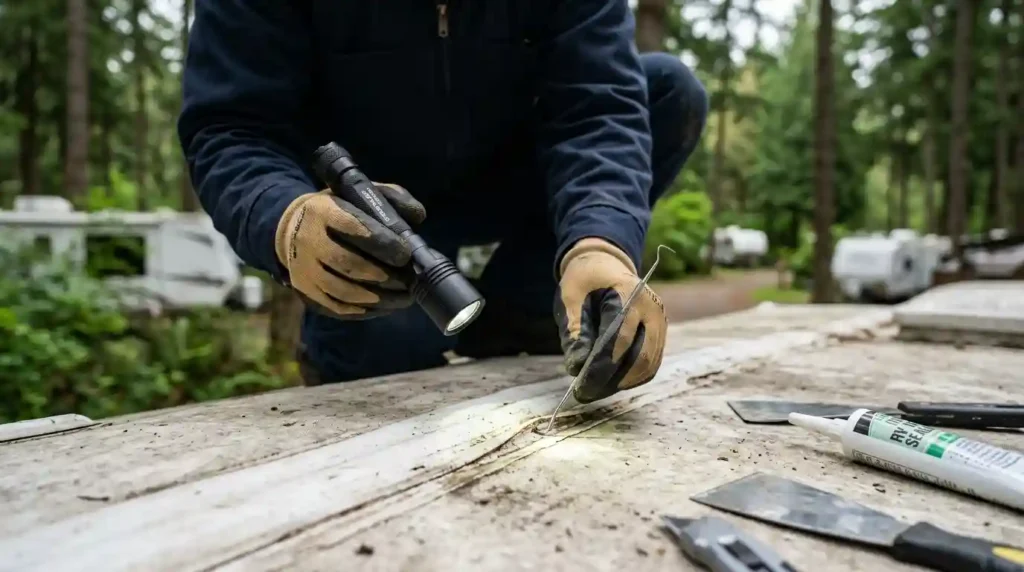
RV Insurance Quotes Washington: Getting Accurate Numbers
A quote is only as accurate as its inputs, and the most commonly wrong ones are usage days and storage address. Have these ready: VIN, year, make, model, purchase price, title, storage ZIP, nights used per year, and attached equipment.
Then follow a simple order:
- Gather those details and your current declarations page.
- Compare like for like: same limits, deductible, and valuation method.
- Get quotes from more than one carrier type.
- Check sub-limits, exclusions, and storage terms, not just price.
- Confirm the effective date and send proof to your lender.
The usual traps are understated usage, a storage ZIP that differs from where the RV actually sits, and mismatched deductibles. A low quote built on wrong inputs can be reclassified at claim time. Markets differ, too; our look at RV insurance in Las Vegas shows which inputs shift pricing in another state.
Full-Timers and Rentals
Full-timer coverage is a different policy form for RVs used as a primary residence, typically with higher liability and contents limits. Progressive suggests considering it beyond six months a year, while Roamly uses 150 nights. Your carrier’s policy language sets the real definition, and a recreational policy on a full-time RV can cause trouble at claim time.
Rental use may void a personal policy. If you rent your RV through a business, our explainer on whether an LLC needs commercial insurance covers the separate commercial question.
Choosing an Insurer
No source I could verify supports a universal ranking of Washington carriers, so I won’t give one. Judge carriers by criteria instead:
- Financial strength: a published AM Best rating.
- Complaints: the NAIC complaint index and Washington OIC records.
- Coverage forms: agreed value, total loss replacement, full-timer, and flood treatment.
- Storage terms: what is suspended and what stays active.
Some agency pages list carriers that don’t write RV policies at all, so verify before you rely on a list. What stood out to me when comparing Washington’s DOL guidance with agency pages is how often legal requirements get blended with sales advice. The law sets a floor, and everything above it is a risk decision.
Common Mistakes
Most mistakes come from assumptions. The most common is believing the tow vehicle covers trailer repairs. Another is chasing cheap RV insurance in Washington by cutting liability or comprehensive, since the savings arrive monthly and the loss arrives in one bad storm.
Others include driving a stored RV, understating nights used, skipping spring seal checks, ignoring Canada until the border, and not sending proof of coverage to the lender, which can lead to lender-placed coverage billed to you.
Final Thoughts:
The Law Sets the Floor, Your Season Sets the Risk. So what does Washington RV insurance come down to? For a motorhome, 25/50/10 is the legal floor. For a trailer, the law points to your tow vehicle, and the rest depends on your lender, your storage, and how Washington weather treats your RV.
The most useful next step is concrete: pull your declarations page, confirm your liability limits and storage address, and verify current minimums with the Washington Department of Licensing and the Office of the Insurance Commissioner.
FAQs
Is RV insurance required in Washington state?
Motorhomes need liability of at least 25/50/10. Trailers have no state mandate, but the tow vehicle must be insured.
What are Washington’s minimum limits?
$25,000 per person, $50,000 per accident, and $10,000 for property damage, per the Department of Licensing. Confirm the current figures.
Does my tow vehicle’s insurance cover my trailer?
It generally covers liability while hitched, not repairs to the trailer.
Can I suspend coverage in winter?
Many carriers offer storage coverage that keeps comprehensive active. Don’t drive the RV while it’s in effect.
Does it cover mold or flooding in Washington?
Mold from poor maintenance is often excluded, and flood treatment varies by carrier.
Is my RV covered in Canada?
It depends on the carrier, so ask before crossing.
Do I need gap coverage?
Only if you finance and could owe more than the payout after a total loss.
Can I rent out my RV?
Rental use may void a personal policy, so check your carrier’s language.