
RV insurance Georgia is required only in a narrow form: liability coverage on the vehicle that is on the road. A motorhome must carry at least 25/50/25: $25,000 per person and $50,000 per accident for bodily injury, plus $25,000 for property damage. A trailer has no standalone mandate, since the liability requirement attaches to the tow vehicle. Collision, comprehensive, and full-timer protection are optional unless your lender requires them.
That gap between “required” and “covered” is where most costly surprises begin. Progressive’s 2024 Georgia averages were $1,065.82 per year for a motorhome and $610.29 for a travel trailer, but your price depends on the RV’s class and value, how often you use it, where you store it, and the limits and deductibles you choose. This guide separates what the law requires from what a policy actually pays for, so you can compare quotes on equal terms.
All worked examples are illustrative. This is general education, not advice about your particular RV or policy.
Does Georgia Require Insurance for an RV?
For a motorhome, yes. Georgia treats it as a motor vehicle, so the 25/50/25 liability minimums apply. A towable is different: Progressive’s Georgia guidance says the requirement attaches to the vehicle pulling the trailer.
| RV type | What Georgia law requires | What the law does not address |
| Motorhome (Class A, B, C) | Liability at 25/50/25 | Damage to your own RV, belongings, and campsite liability |
| Travel trailer or fifth wheel | Liability on the tow vehicle | Damage to or theft of the trailer itself |
| Financed or leased RV | Same as above, plus your loan terms | Lenders typically require comprehensive and collision coverage |
Under O.C.G.A. § 33-7-11, insurers must offer uninsured motorist coverage, and you can decline in writing. Lenders add their own layer, so a financed trailer can be legally optional to insure and contractually mandatory at the same time.
Where the Legal Minimum Runs Out
Imagine a motorhome driver near Atlanta injures three people, with medical bills of $40,000, $30,000, and $20,000. The $25,000 per-person cap limits the first two claims to $25,000 each, and the third fits at $20,000. That totals $70,000, but the $50,000 per-accident limit stops payment there.
The bills come to $90,000, so $40,000 can fall on the at-fault driver personally. If that would seriously hurt your finances, ask whether your own liability limits, not the legal floor, match what you could absorb. If a serious crash would also leave dependents exposed, it is worth looking at what a $3 million life insurance policy costs or even a higher-net-worth household.
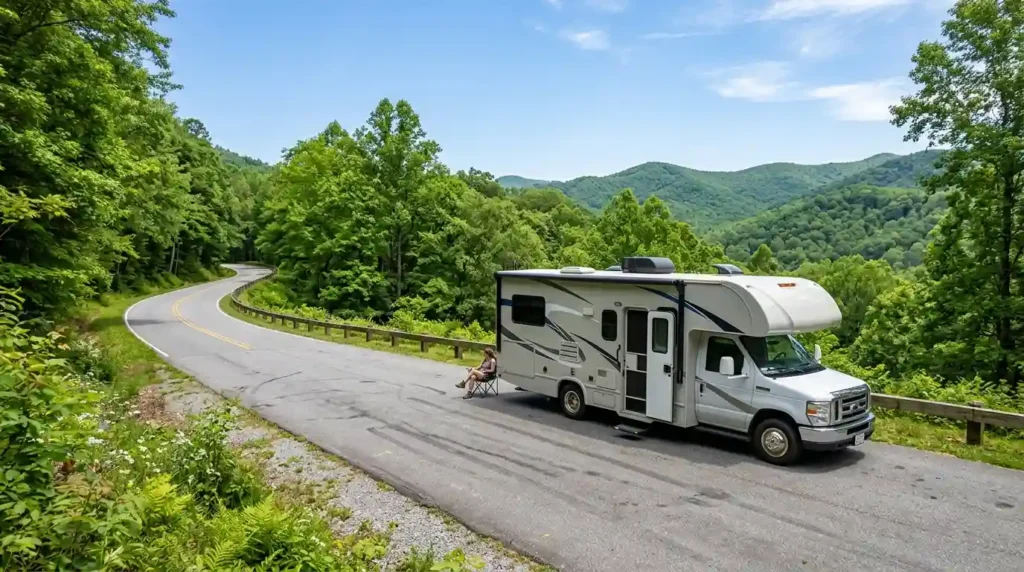
What a Georgia RV Policy Really Pays For
Most policies bundle liability, collision, and comprehensive, then add optional extras. Three groups are worth separating:
- Liability pays for other people’s injuries and property damage when you are at fault. It never pays to fix your own RV.
- Collision and comprehensive pay for your RV: crashes in the first case, theft, fire, hail, and falling trees in the second, minus your deductible. Even small events can matter, such as a cracked windshield from a rock, where comprehensive coverage may apply depending on your policy.
- Extras such as personal effects, vacation liability, roadside help, and loss assessment are priced and capped separately. Progressive lists up to $5,000 for RV association charges.
Fine print matters. Progressive’s roadside towing applies only when the unit is disabled within 100 feet of a road or highway, which counts for a lot at a remote campground.
The Valuation Detail Quotes Rarely Highlight
Total loss payments depend on how the policy values your RV: actual cash value subtracts depreciation, agreed value is fixed in advance, and total loss replacement pays for a new unit. Progressive’s Georgia page says replacement applies only if the vehicle is under five years old.
Consider a Macon owner with a $62,000 loan balance on a motorhome valued at $54,000 actual cash value, with a $1,000 deductible. The insurer pays $53,000, leaving $9,000 owed to the lender. Ask whether loan payoff coverage exists, because two quotes at the same price can use different valuation methods.
Georgia Weather and Theft: Coast, Mountains, and Metro
Georgia’s risks vary by region, so the same policy can feel adequate in one county and thin in another.
- Coast (Savannah, Golden Isles): Hurricanes and storm surge lead. Ask whether flood damage falls under comprehensive and whether a named-storm deductible applies.
- North Georgia (Blue Ridge, Ellijay): Wind, hail, and falling trees are common comprehensive claims, and mountain roads raise collision exposure.
- Metro Atlanta: Theft from storage lots and driveways is the usual worry, which puts personal-effects limits into play.
Reading the OCI guidance next to carrier pages shows how little of what owners worry about is legally required. Hail, flood, and theft are all contractual, so check your flood coverage before storm season, not during it.
How Much Does RV Coverage Cost in Georgia?
Progressive’s published 2024 Georgia averages were $ 1,065.82 a year for a motorhome (88.82 a month) and 610.29foratraveltrailer(50.86 a month. Its countrywide averages were $1,052 and $594. Liability-only motorhome policies at the same carrier start at $125 a year, but they pay nothing toward your own RV.
These averages describe one carrier’s customers, not the whole market. Class, value, age, usage days, storage, driving record, deductible, and limits all move the number. Full-timer premiums usually run higher, with published guides ranging from about $500 to $4,000 a year, too wide to use as a benchmark.
| What people expect | What the documented numbers show |
| “A motorhome runs about $1,066 a year” | One carrier’s 2024 Georgia average, blended across classes. Larger units can sit well above it |
| “Liability-only is $125” | A starting point for motorhomes that pays nothing toward your own RV |
| “The quoted price is the final price” | Verification of driver history, RV value, and storage address can change it before binding |
What a Hail Claim Looks Like
Say a Class C motorhome near Ellijay takes $9,500 in covered hail damage to the roof and awning. With a $1,000 deductible, the insurer pays $8,500. With a $2,500 deductible, it pays $7,000, both before depreciation, limits, or exclusions.
The higher deductible shifts $1,500 to you on every such claim. Whether the premium savings justify that depends on real quotes at both levels.
Affordable Coverage in Georgia: Where Savings Are Real
The dependable levers are deductible, stated usage, storage, and bundling. Progressive suggests raising comprehensive and collision deductibles, and insurers may ask roughly how many days a year you use the RV. Secured or covered storage can change how theft and weather risk are rated, though discounts differ by carrier.
Many discount lists repeat auto items, such as good student or green vehicle, that may not exist on an RV policy, so ask for the RV-specific list in writing. If you bundle with home coverage, this homeowners insurance quote guide explains what to gather before you ask. A lower premium is only an improvement if you can pay the new deductible within a week without borrowing.
The cheapest option can also be the wrong one. For a paid-off older motorhome, liability-only can be legal and rational, but it will not satisfy a lender. Cut limits last, not first, and consider an umbrella policy above your liability limits, which adds its own cost and conditions.
Full-Time RV Coverage in Georgia: Who Qualifies
Insurers set the full-timer threshold, not Georgia law. Progressive treats living in the RV for more than six months a year as full-time use, while some carriers use 150 nights. Full-timer coverage generally adds personal liability, medical payments for visitors, and loss assessment, the pieces a homeowners policy would otherwise supply.
An owner who spends 160 nights a year in the RV is a full-timer under a 150-night rule but probably not under a six-month rule (roughly 182 nights). Ask each insurer for its written definition and answer the usage question truthfully, since a mismatch can be raised at claim time. Progressive also notes that medical payments do not apply to its travel trailer policies, so trailer full-timers should ask which protections carry over.
If you run a business from the RV, personal coverage may not respond to business claims. Check whether an LLC needs commercial insurance before relying on a personal policy.
Georgia RV Insurance Quotes and Coverage: How to Compare
A quote only means something when every insurer prices the same limits, deductibles, and valuation method. Gather the VIN, class and model year, value, storage ZIP code, annual usage days, driver history, and lienholder details first. Then compare in this order:
- Set identical liability limits and deductibles on every quote.
- Confirm the valuation method: actual cash value, agreed value, or replacement.
- List which extras are included, with dollar limits.
- Ask what could change the price before binding.
- Read the declarations page before you pay, not after.
If you winter in another state, compare local pricing too, for example, RV insurance quotes in Florida.
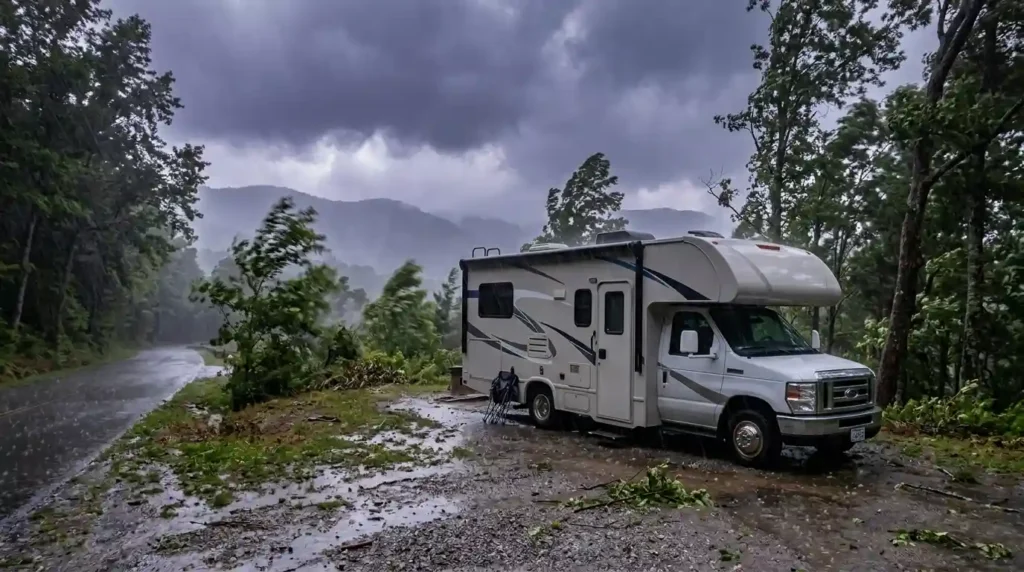
Where the Quoted and Final Price Part Ways
A quote is an estimate built on what you told the insurer. Verification of your driving record, the RV’s value, or the storage address can affect the final premium. A quote is also not proof of coverage, since a lender or campground wants the declarations page or a certificate. Ask how fast proof arrives before your pickup or travel date.
A price far below the others paired with low limits deserves a second look, as does a refusal to state the valuation method in writing.
Best RV Insurance Companies in Georgia: How to Judge
No single company is best for every owner, so focus on criteria you can check: financial strength ratings such as AM Best, the NAIC complaint index, whether the carrier writes your RV class and usage in Georgia, and how its documents describe claims handling. OCI’s auto insurance page also points to a license lookup and a complaint process. For a sense of how a national auto carrier is typically evaluated, see this overview of Direct General Insurance.
| Carrier type | What to expect | What to verify |
| RV-focused programs | Broader options such as full-timer and total loss replacement | Age limits on replacement, the full-timer definition |
| National auto carriers with RV lines | Bundling with auto or home | Whether agreed value and full-time coverage exist |
| Independent agencies | Quotes from several carriers | Which carriers do they actually compare |
Why Rankings Disagree
Third-party “best of” lists rarely agree because each weighs price, coverage breadth, and service differently. A carrier calling itself a leader is marketing, not evidence. Ask for the AM Best rating and NAIC complaint index of each carrier you shortlist, then set them beside the quote.
Final Thoughts
RV insurance Georgia comes down to three documents: OCI’s liability rules, the declarations page of any policy you consider, and your lender’s requirements. The law fixes the first, and you control the second and third, which is where most costly surprises begin.
Run the checks above against two or three insurers and lay their declarations pages side by side. Compare liability limits, deductibles, valuation method, and the dollar caps on extras, in that order. Before you sign, confirm the current minimum limits on the OCI page and get each insurer’s written definitions of full-time use and total loss replacement.
FAQ’s
Is RV insurance required in Georgia?
Motorhomes must carry at least 25/50/25 liability. A towable relies on the tow vehicle’s liability, and lenders usually require physical-damage coverage on financed units.
What is the minimum liability for a motorhome?
$25,000 per person and $50,000 per accident for bodily injury, plus $25,000 for property damage. Confirm current limits on the OCI auto insurance page.
Does my auto policy cover my travel trailer?
Liability usually follows the tow vehicle while hitched. Damage to the trailer itself is often excluded, so ask about a separate trailer policy.
Does homeowners insurance cover an RV?
Homeowners policies commonly exclude motor vehicles and limit coverage for belongings kept in an RV. Read the exclusions first.
How much does RV coverage cost in Georgia?
Progressive’s 2024 Georgia averages were $1,065.82 for a motorhome and $610.29 for a travel trailer. Your price depends on class, value, usage, storage, driving record, limits, and deductible.
Who has the cheapest coverage?
There is no universal answer. Get quotes with identical limits, deductibles, and valuation methods from several insurers.
How many nights make me a full-timer?
Insurers set the line. Progressive uses more than six months, and some carriers use 150 nights. Ask for the definition in writing.
Does it cover hurricane or flood damage?
Comprehensive often responds to storm and flood damage, but flood wording and named-storm deductibles vary. Confirm both before hurricane season.
What is vacation liability?
Optional coverage for injury or damage claims while the RV is parked at a campsite, such as a visitor tripping over your gear. Limits vary.
Do I need coverage while the RV is in storage?
Theft, fire, and weather still happen in storage, and lenders often keep comprehensive requirements in place. Ask about storage or seasonal options.
Does coverage apply outside Georgia?
Many policies cover travel across the U.S., but Canada, Mexico, and extended stays can differ. Confirm the covered territory before you leave, especially if you plan a trip to Nevada and want to compare RV insurance in Las Vegas.